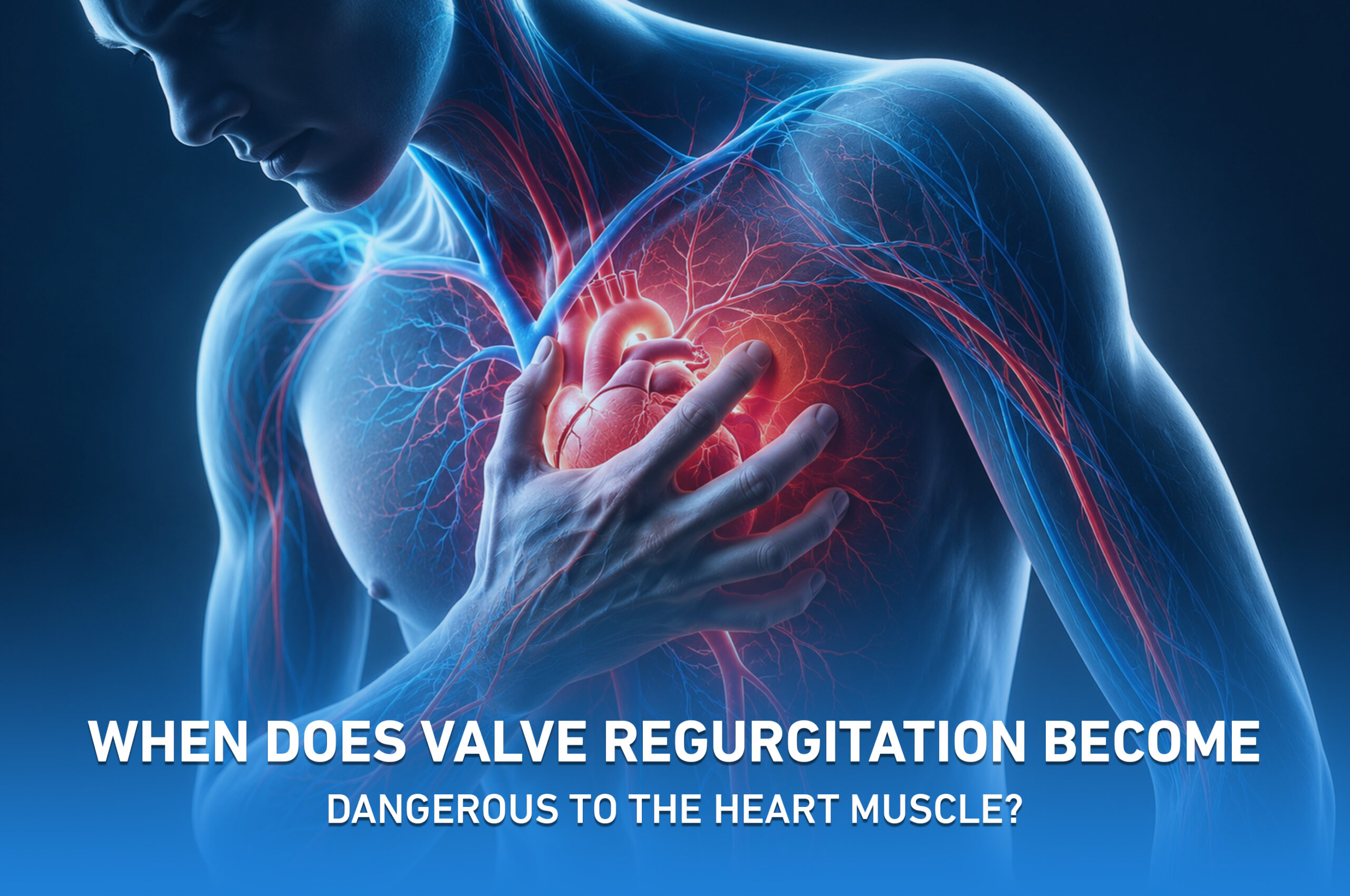
Heart valve regurgitation is a common cardiac condition in which one of the heart valves does not close properly, causing blood to leak backward instead of moving forward in the normal direction of circulation.
Some patients may live for years with mild regurgitation without symptoms. In other cases, however, the condition may gradually progress and start affecting the heart muscle and its pumping function.
The key question is not only whether valve regurgitation exists, but rather: when does it become dangerous for the heart muscle?
What Is Heart Valve Regurgitation?
The heart contains four main valves that regulate blood flow:
- Mitral valve
- Aortic valve
- Tricuspid valve
- Pulmonary valve
In a healthy heart, each valve opens to allow blood to pass forward and then closes tightly to prevent backward flow.
In valve regurgitation, the valve does not close completely, allowing blood to leak backward with each heartbeat. Over time, this leakage increases the workload on the heart muscle.
When Does Valve Regurgitation Start Affecting the Heart Muscle?
In the early stages, regurgitation may be mild and cause no significant impact on heart function. However, when the leakage persists or gradually worsens, the heart begins to compensate by working harder to maintain adequate blood circulation.
This long-term overload can lead to:
- Enlargement of heart chambers
- Stretching of the heart muscle
- Gradual weakening of pumping efficiency
At this stage, the condition shifts from a simple valve abnormality to a problem that directly affects the heart muscle.
Signs That Valve Regurgitation Is Becoming Serious
There are several clinical and imaging indicators that suggest valve regurgitation is beginning to affect the heart muscle:
1. Enlargement of Heart Chambers
The heart may enlarge as it tries to compensate for the backward blood flow. This is usually detected through echocardiography.
2. Reduced Heart Pumping Function
A decrease in ejection fraction indicates that the heart muscle is starting to weaken.
3. Appearance of Symptoms
Common symptoms include:
- Shortness of breath
- Fatigue with minimal exertion
- Palpitations
- Reduced exercise tolerance
4. Progression of Regurgitation Severity
Mild regurgitation may progress to moderate or severe levels over time.
5. Effects on Overall Circulation
In advanced cases, reduced cardiac efficiency can begin to affect other organs in the body.
Why Delaying Treatment Can Be Harmful
The main risk in valve regurgitation is not simply its presence, but untreated progression over time.
As the condition worsens:
- The heart muscle is subjected to continuous overload
- Heart chambers continue to enlarge
- Structural changes may become permanent
- Recovery of heart function may become incomplete even after treatment
This is why timing plays a crucial role in management decisions.
When Should Treatment Be Considered?
The decision to intervene does not depend solely on the presence of regurgitation, but rather on a combination of factors:
- Severity of valve leakage
- Impact on heart muscle function
- Presence of symptoms
- Echocardiography findings
- Rate of disease progression
In some cases, intervention may be recommended even before symptoms appear to protect the heart muscle from irreversible damage.
Does Every Case of Valve Regurgitation Require Surgery?
No.
Valve regurgitation exists in different degrees:
- Mild regurgitation: usually requires monitoring only
- Moderate regurgitation: requires regular follow-up and evaluation
- Severe regurgitation: may require surgical or interventional assessment depending on its effect on the heart
Treatment decisions are always based on a full clinical evaluation rather than a single test result.
How Is the Risk to the Heart Muscle Evaluated?
Assessment of valve regurgitation involves several key steps:
1. Echocardiography
Used to evaluate:
- Severity of regurgitation
- Heart chamber size
- Heart muscle function
2. Clinical Symptoms
Patient symptoms are compared with imaging findings to understand disease impact.
3. Additional Diagnostic Tests
In some cases, further imaging or cardiac catheterization may be required.
4. Ongoing Monitoring
Progression over time is critical in deciding the appropriate timing of intervention.
Conclusion
Heart valve regurgitation becomes dangerous for the heart muscle when it begins to cause:
- Enlargement of heart chambers
- Reduced pumping function
- Persistent or worsening symptoms
- Progressive structural changes in the heart
The most important factor is not simply the presence of regurgitation, but its impact on heart function over time.
Early and accurate evaluation can help protect the heart muscle and prevent irreversible damage, while delayed treatment may reduce the likelihood of full recovery.
Schedule a Consultation
If you have been diagnosed with heart valve regurgitation or would like to assess its impact on your heart function, a specialized cardiac evaluation can help determine the most appropriate treatment plan.
Dr. Ihab Elsharkawy provides comprehensive assessment and management of valvular heart disease, helping patients make informed decisions based on modern cardiac surgery standards.