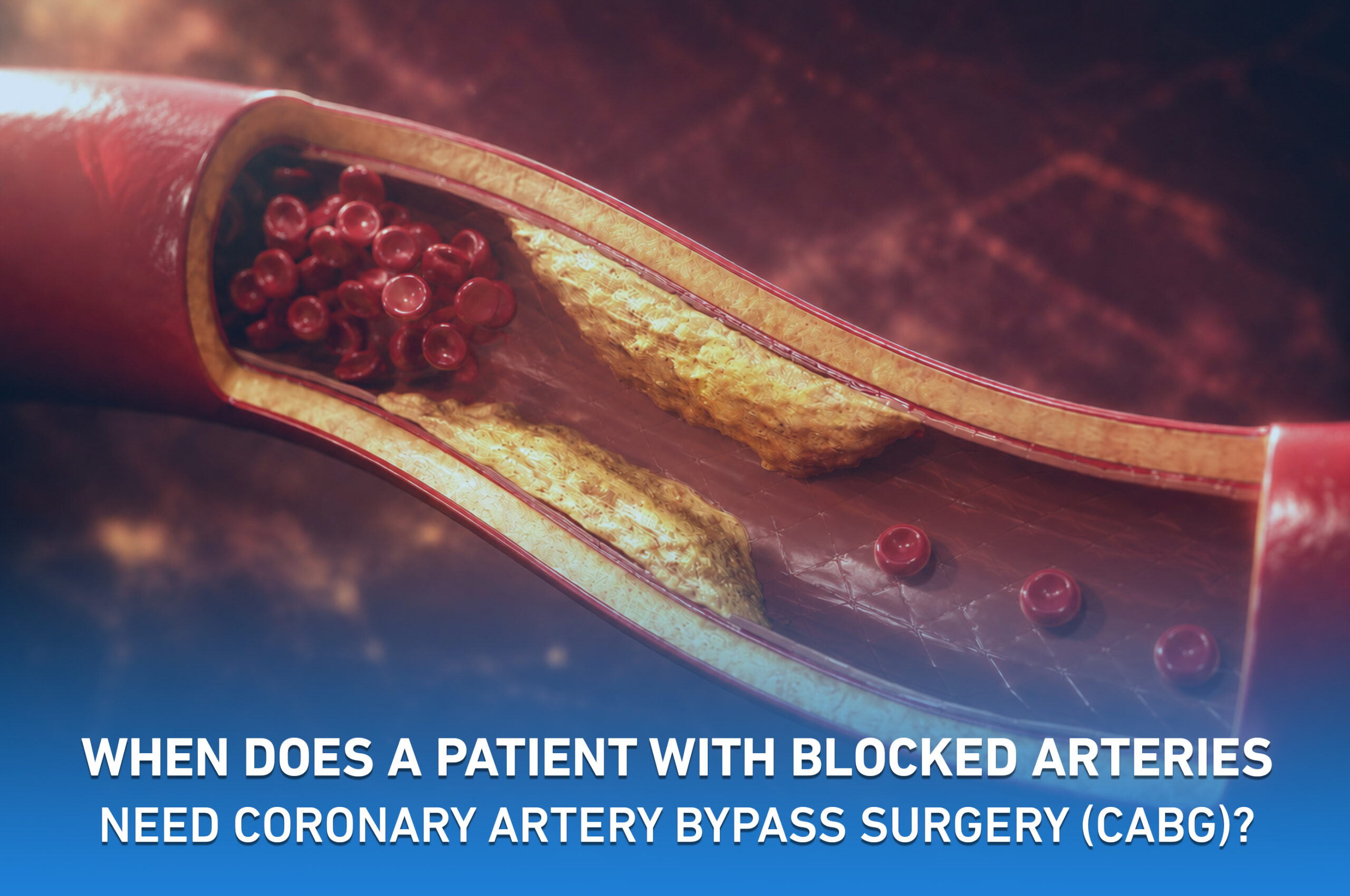
Coronary artery bypass grafting (CABG) is one of the most important surgical treatments for coronary artery disease. The goal of the procedure is to restore blood flow to the heart muscle by creating new pathways around blocked arteries using healthy blood vessels.
However, this surgery is not recommended for every patient, and the decision depends on the severity of blockage, number of affected arteries, and heart function.
What Is Bypass Surgery?
Bypass surgery involves:
- Rerouting blood flow around blocked coronary arteries
- Using a healthy artery or vein as a graft
- Improving oxygen supply to the heart muscle
When Does a Patient Need Bypass Surgery?
A patient may be recommended for CABG in the following situations:
1. Multiple Coronary Artery Blockages
Surgery is often considered when:
- Two or more coronary arteries are significantly blocked
- There is widespread coronary artery disease
In many cases, surgery provides better long-term outcomes than stenting.
2. Left Main Coronary Artery Disease
This is a serious condition where:
- A major artery supplying a large portion of the heart is blocked
- It carries a high risk of heart complications
CABG is usually preferred over stenting in such cases.
3. Failure or Unsuitability of Stents
Bypass surgery may be needed if:
- Previous stenting procedures have failed
- The arteries are not suitable for catheter-based treatment
4. Reduced Heart Function Due to Poor Blood Flow
If echocardiography shows:
- Decreased heart pumping efficiency
- Weak heart muscle due to insufficient blood supply
CABG can help restore blood flow and improve function.
5. Persistent Symptoms Despite Medication
Such as:
- Recurrent chest pain (angina)
- Shortness of breath on exertion
- Inability to perform normal daily activities
Even with optimal medical treatment or prior interventions.
6. Diabetic Patients with Multi-Vessel Disease
In many cases:
- Diabetes leads to diffuse coronary artery disease
- CABG may offer better long-term outcomes compared to stenting
How Is the Decision Made?
The decision for surgery is based on:
- Coronary angiography results
- Echocardiography findings
- Overall patient condition
- Presence of chronic diseases (diabetes, kidney disease, etc.)
- Evaluation by a multidisciplinary Heart Team
Is Surgery the Only Option?
No.
Treatment options may include:
- Medications and lifestyle changes
- Coronary stenting (PCI)
- Bypass surgery (on-pump or off-pump CABG)
The best option is chosen based on individual patient evaluation.
Conclusion
A patient with coronary artery disease needs bypass surgery when blockages are severe, multiple, or significantly affecting heart function, or when stenting is not suitable. The final decision is always based on a comprehensive evaluation to ensure the safest and most effective treatment approach.
Schedule a Consultation
If you have been diagnosed with coronary artery disease, Dr. Ihab Elsharkawy provides specialized cardiac evaluation to determine whether bypass surgery or alternative treatments are most appropriate for your condition.