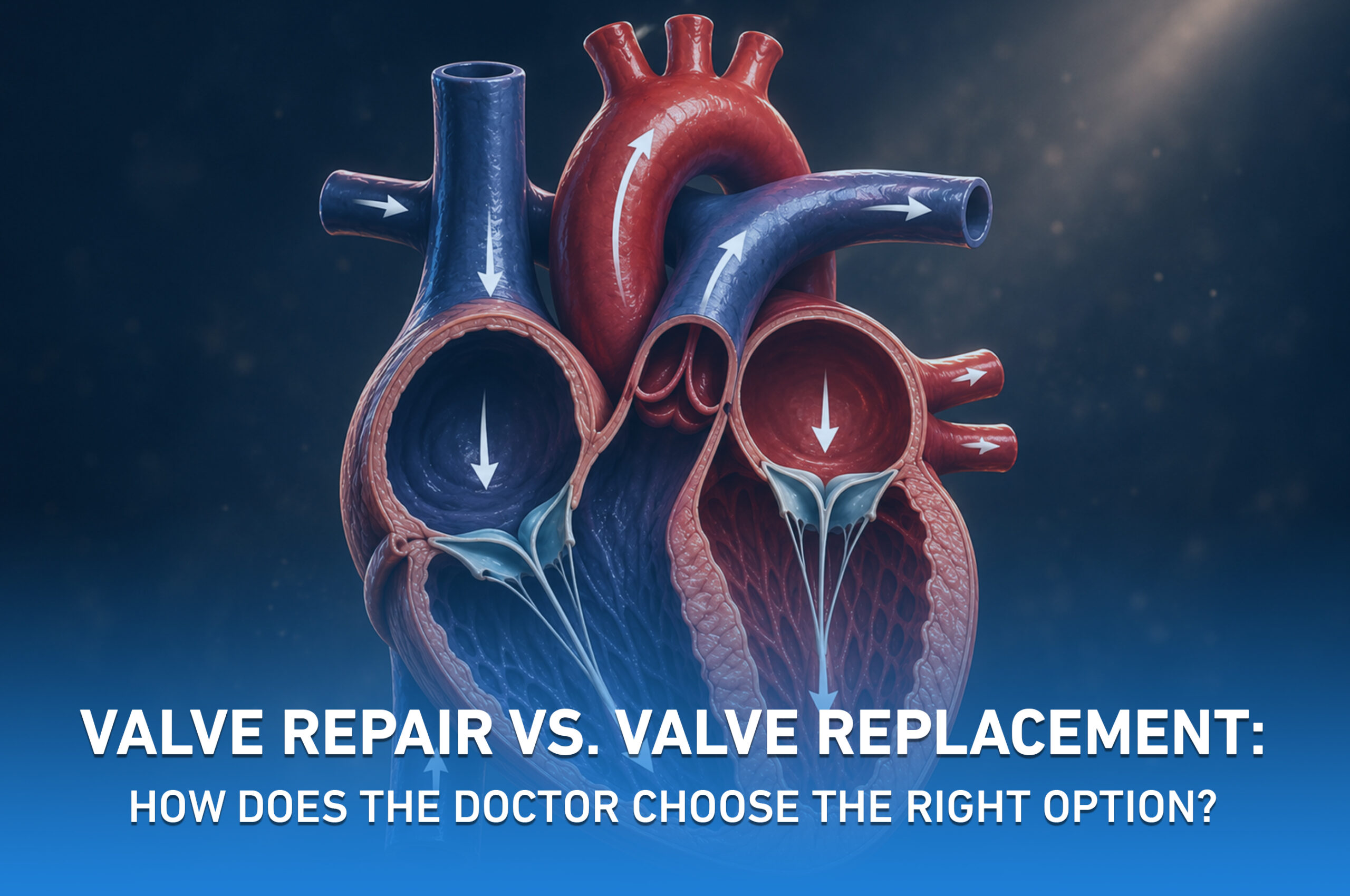
Heart valve surgery is one of the most common procedures in cardiac surgery. When patients are diagnosed with a valve disorder, one of the first questions they ask is: Should the valve be repaired or replaced?
The answer is not the same for every patient. Choosing between valve repair and valve replacement depends on several medical factors, including the type of valve disease, the condition of the valve, the patient’s age, and the expected long-term outcome.
The primary goal is always to select the treatment that provides the safest procedure and the best long-term results.
What Is the Difference Between Valve Repair and Valve Replacement?
Valve Repair
Valve repair involves preserving the patient’s natural valve and correcting the structural problem causing the dysfunction.
Repair techniques may include:
- Reshaping the valve leaflets
- Repairing damaged valve tissue
- Reinforcing the valve annulus with a ring
- Restoring proper valve closure
This approach is typically considered when the valve tissue is still healthy enough to function properly after correction.
Valve Replacement
When the valve is severely damaged, repair may not be possible or may not provide durable results.
In these cases, the surgeon removes the diseased valve and replaces it with an artificial valve, which may be:
- A mechanical valve
- A biological (tissue) valve
The choice of replacement valve depends on several patient-specific factors.
When Is Valve Repair Preferred?
Whenever feasible, cardiac surgeons generally prefer valve repair, particularly for mitral valve regurgitation and certain tricuspid valve disorders.
Valve repair offers several advantages:
- Preservation of the patient’s natural valve
- Better maintenance of heart function
- Reduced need for long-term blood-thinning medications
- Lower risk of complications associated with artificial valves
- Excellent long-term outcomes in appropriately selected patients
However, the success of repair depends on both the underlying valve disease and the surgeon’s expertise.
When Is Valve Replacement the Better Option?
Valve replacement may be recommended when repair is unlikely to provide a durable result.
Common situations include:
Severe Valve Calcification
Heavily calcified valves often cannot be repaired effectively.
Advanced Structural Damage
When valve leaflets or supporting structures are extensively damaged, replacement may be the safer solution.
Failed Previous Repair
Patients who have experienced recurrent valve dysfunction after a prior repair may require replacement.
Certain Cases of Aortic Valve Disease
For severe aortic valve stenosis, replacement is often the most effective treatment.
What Factors Influence the Decision?
The choice between repair and replacement involves a comprehensive evaluation of both the valve and the patient.
Patient Age
Age is an important consideration when determining both the surgical strategy and the type of replacement valve if needed.
Type of Valve Disease
The surgeon evaluates whether the problem is:
- Valve regurgitation (leakage)
- Valve stenosis (narrowing)
- A combination of both
The underlying condition often influences which option is more appropriate.
Heart Function
The condition of the heart muscle plays a major role in treatment planning.
Associated Medical Conditions
Other health issues may affect the surgical approach, including:
- Diabetes
- Kidney disease
- Lung disease
- Coronary artery disease
Likelihood of Long-Term Repair Success
A repair is generally preferred only when there is a high probability that it will remain effective for many years.
How Is the Valve Evaluated Before Surgery?
The most important diagnostic tool is echocardiography (heart ultrasound).
This examination helps assess:
- Severity of valve disease
- Valve anatomy and function
- Heart chamber size
- Left ventricular function
- Pulmonary artery pressure
In selected cases, additional tests such as CT scans, cardiac MRI, or cardiac catheterization may be required to support treatment planning.
Is Valve Repair Always Better Than Replacement?
Not necessarily.
Valve repair is advantageous only when it can provide a durable and reliable result.
If there is a significant risk that the repair may fail or require another operation in the future, valve replacement may be the safer and more effective option.
For this reason, surgeons focus on choosing the treatment that offers the best long-term outcome rather than simply avoiding valve replacement.
Conclusion
The decision between valve repair and valve replacement depends on several factors, including the type of valve disease, the condition of the valve, the patient’s age, heart function, and the expected durability of the repair.
In many cases, valve repair offers excellent long-term benefits by preserving the natural valve and maintaining heart function. However, when repair is unlikely to provide a lasting solution, valve replacement may be the most effective and reliable treatment.
A thorough evaluation by an experienced cardiac surgeon is essential to determine the most appropriate approach and achieve the best possible outcome.
Schedule a Consultation
If you have been diagnosed with a heart valve condition and would like to know whether valve repair or valve replacement is the most suitable option, Dr. Ihab Elsharkawy provides comprehensive evaluation and personalized treatment planning to help patients make informed decisions about their cardiac care.