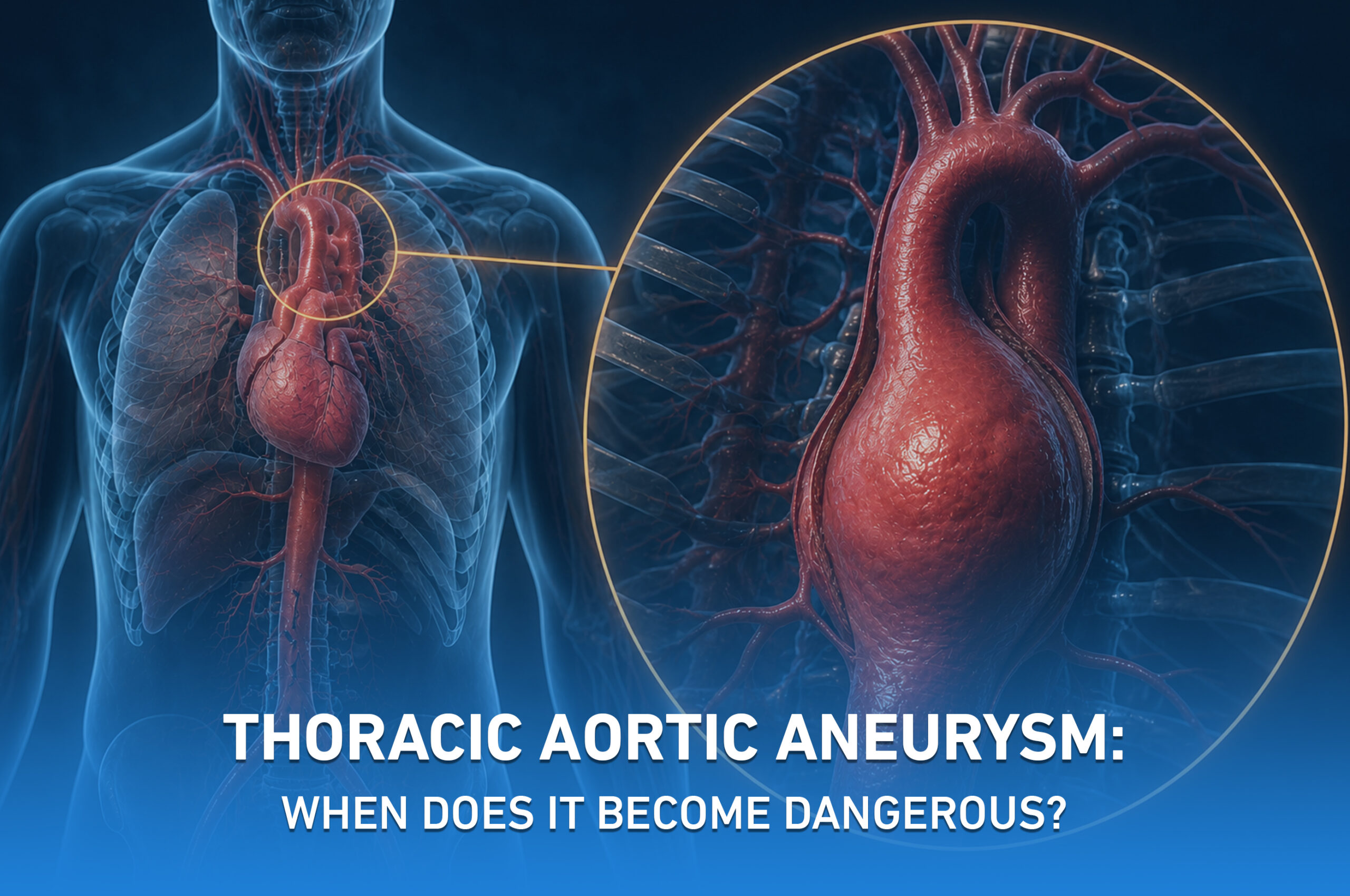
A thoracic aortic aneurysm is an abnormal dilation of the aorta within the chest. It develops when the wall of the aorta becomes weakened and gradually expands over time. Many patients live with the condition for years without symptoms, which makes regular monitoring essential.
The danger of the condition does not depend only on its presence, but on its size, growth rate, and associated risk factors.
What Is a Thoracic Aortic Aneurysm?
It is a localized enlargement of the thoracic portion of the aorta, caused by weakening of the vessel wall. As the aneurysm grows, the risk of rupture or dissection increases.
Why Does It Develop?
Common causes and risk factors include:
- Chronic high blood pressure (the most important factor)
- Atherosclerosis (hardening of the arteries)
- Genetic connective tissue disorders (e.g., Marfan syndrome)
- Aging
- Smoking
- Previous aortic injury or inflammation
Does It Cause Symptoms?
In most cases, it is asymptomatic in the early stages. When symptoms do appear, they may include:
- Chest or upper back pain
- Hoarseness of voice
- Difficulty swallowing
- Persistent cough
- Shortness of breath in advanced cases
When Does a Thoracic Aortic Aneurysm Become Dangerous?
An aneurysm is considered high risk when one or more of the following occur:
1. Increased Size (Diameter)
The larger the aneurysm, the higher the risk of rupture or dissection.
Once it reaches a critical size, surgical evaluation becomes necessary.
2. Rapid Growth
- Aneurysms that expand quickly over months
- Significant increase in diameter during follow-up imaging
Rapid growth is a strong warning sign of instability.
3. Development of Symptoms
New or worsening symptoms may indicate increasing risk, such as:
- Persistent or sudden chest/back pain
- Shortness of breath
- Hoarseness or pressure on surrounding structures
4. Risk of Rupture or Dissection
As the aortic wall weakens further, it may lead to:
- Aortic dissection
- Aortic rupture (life-threatening emergency)
5. Associated High-Risk Conditions
Risk increases significantly in patients with:
- Uncontrolled hypertension
- Genetic connective tissue disorders
- Family history of aortic aneurysm or dissection
How Is the Risk Assessed?
1. CT Angiography (CTA)
- Most accurate test
- Measures aneurysm size precisely
- Tracks progression over time
2. Echocardiography
- Evaluates the proximal aorta and heart function
3. MRI
- Used for long-term follow-up without radiation exposure
When Is Surgery or Intervention Needed?
Treatment is considered when:
- The aneurysm reaches a critical size
- Rapid enlargement is detected
- Symptoms develop
- There is high risk of rupture or dissection
Treatment Options
1. Medical Management
- Used for small, stable aneurysms
- Strict blood pressure control is essential
- Reduces stress on the aortic wall
2. Regular Monitoring
- Periodic imaging (CT, MRI, or echocardiography)
- Tracks size and growth rate
3. Surgical or Endovascular Repair
- Open surgical replacement of the affected aorta
- Endovascular stent graft (in selected cases)
- Used to prevent rupture or dissection
Warning Signs That Require Emergency Care
Seek immediate medical attention if you experience:
- Sudden, severe chest or back pain
- Dizziness or fainting
- Severe shortness of breath
- Symptoms resembling aortic dissection
Conclusion
A thoracic aortic aneurysm can remain stable for a long time, but becomes dangerous when it grows in size, expands rapidly, or causes symptoms. Careful monitoring and strict blood pressure control are essential to prevent life-threatening complications such as rupture or dissection.
Schedule a Consultation
If you have been diagnosed with a thoracic aortic aneurysm, Dr. Ihab Elsharkawy provides specialized cardiovascular evaluation and follow-up to determine the safest and most effective treatment plan for your condition.