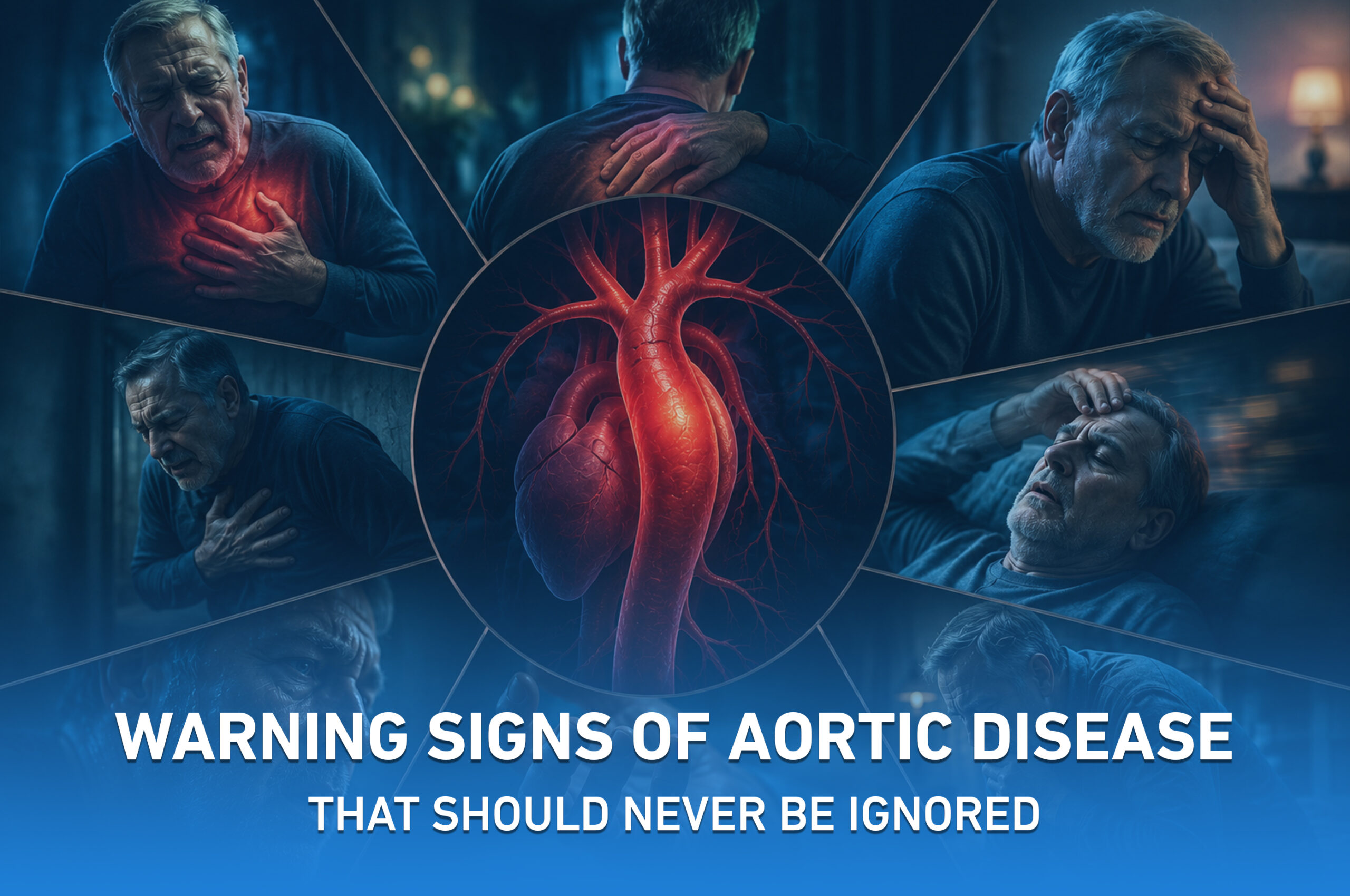
The aorta is the largest artery in the body, responsible for carrying oxygen-rich blood from the heart to all organs. Because of its critical role, any condition affecting it—such as aortic aneurysm (dilation) or aortic dissection (tear in the wall)—can become life-threatening if not diagnosed and treated early.
The challenge is that many aortic diseases develop silently, with symptoms appearing suddenly and severely when complications occur. This makes awareness of warning signs extremely important.
What Are Aortic Diseases?
Aortic conditions mainly include:
- Aortic aneurysm (abnormal dilation of the aorta)
- Aortic dissection (tear in the inner wall of the aorta)
- Weakening or rupture of the aortic wall
- Compression of nearby organs due to enlargement
These conditions vary in severity, but all require careful medical evaluation.
1. Sudden, Severe Chest or Back Pain
One of the most dangerous warning signs is:
- Sudden, intense chest pain
- Pain that may radiate to the back, especially between the shoulder blades
- A tearing or ripping sensation
This symptom is strongly associated with aortic dissection, which is a medical emergency requiring immediate intervention.
2. Shortness of Breath
Breathing difficulties may occur due to:
- Pressure from an enlarged aorta on the heart or lungs
- Reduced cardiac output
- Fluid buildup in advanced cases
If shortness of breath appears suddenly or worsens quickly, it should not be ignored.
3. Fainting or Sudden Dizziness
This may indicate:
- Reduced blood flow to the brain
- Severe disruption in circulation
- A potentially life-threatening aortic event
Sudden loss of consciousness is a red flag requiring urgent evaluation.
4. Irregular or Rapid Heartbeat
Patients may experience:
- Palpitations
- A strong awareness of heartbeat
- Sudden episodes of rapid heart rate
These symptoms can occur when the heart is under strain due to abnormal aortic conditions.
5. Pain Radiating to the Abdomen or Legs
Aortic disease may also affect other areas of the body:
- Abdominal pain (especially in abdominal aortic aneurysm)
- Leg pain or weakness
- Cold sensation in the lower limbs
These signs may indicate impaired blood flow to distant organs.
6. Blood Pressure Differences Between Arms
A key clinical warning sign includes:
- Significant difference in blood pressure between the two arms
- Weak or uneven pulse
- Abnormal circulation patterns
This finding can suggest underlying aortic pathology.
7. Silent or Asymptomatic Phase
In many cases—especially aortic aneurysms—patients may have no symptoms at all.
The condition is often discovered incidentally during:
- CT scans
- Echocardiography
- Routine medical checkups
This silent progression is what makes regular screening important for high-risk individuals.
When Should You Go to the Emergency Room?
Immediate medical attention is required if you experience:
- Sudden, severe chest or back pain
- Fainting or loss of consciousness
- Severe shortness of breath
- Sudden weakness in limbs
- Any combination of symptoms with a known history of aortic disease
These may indicate a life-threatening emergency such as aortic dissection or rupture.
How Are Aortic Diseases Diagnosed?
Doctors use several imaging tools, including:
CT Angiography
The most accurate test to assess:
- Aortic size and dilation
- Location and extent of dissection
- Risk of rupture
Echocardiography
Used to evaluate:
- The ascending aorta
- Heart valve function
- Impact on cardiac performance
MRI Scans
Provide detailed imaging without radiation exposure, used in selected cases.
Does Every Aortic Aneurysm Require Surgery?
No.
Treatment depends on:
- Size of the aneurysm
- Growth rate over time
- Presence of symptoms
- Overall patient condition
- Risk factors such as hypertension or smoking
Some patients require only monitoring, while others may need early surgical intervention.
Conclusion
Symptoms of aortic diseases can range from silent and unnoticed to sudden and life-threatening. Key warning signs such as severe chest or back pain, shortness of breath, fainting, and blood pressure differences should never be ignored.
Early diagnosis and timely management play a crucial role in preventing serious complications and improving survival outcomes.
Schedule a Consultation
If you are experiencing unexplained symptoms or have been diagnosed with an aortic condition, Dr. Ihab Elsharkawy provides specialized cardiac evaluation to determine the most appropriate treatment plan and ensure timely, effective care.