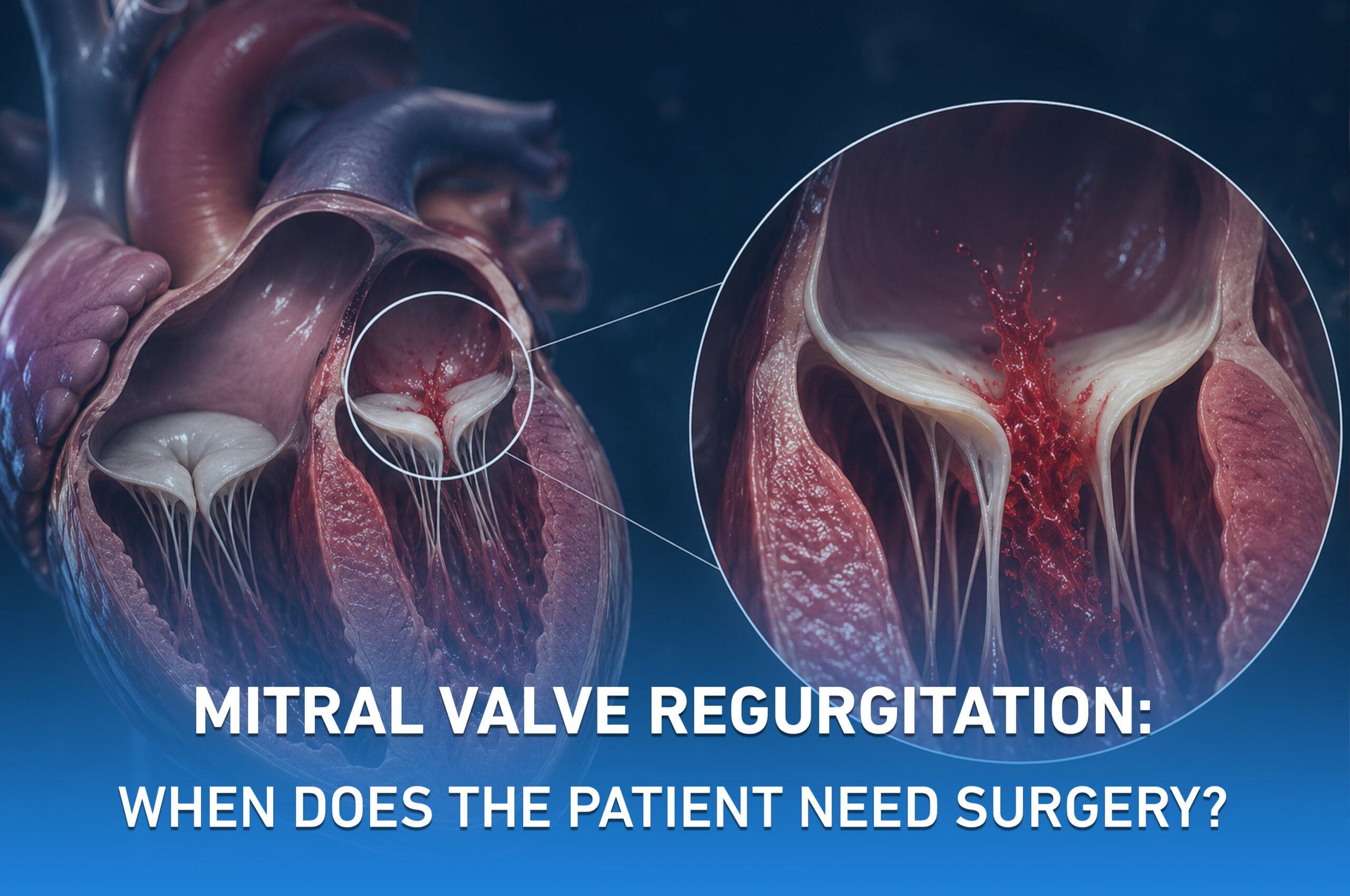
Mitral valve regurgitation (MR) is one of the most common heart valve disorders. It occurs when the mitral valve does not close properly, allowing blood to leak backward from the left ventricle into the left atrium instead of moving efficiently through the heart and out to the body.
Some patients may live for years without noticeable symptoms, while others experience progressive changes that can affect heart function. This often leads to an important question: When does mitral valve regurgitation require surgery?
The answer depends on the severity of the condition, its impact on the heart, and the patient’s symptoms.
What Is Mitral Valve Regurgitation?
The mitral valve is located between the left atrium and the left ventricle. Its role is to ensure that blood flows in only one direction.
When the valve becomes leaky:
- Blood flows backward into the left atrium.
- The heart must work harder to maintain normal circulation.
- The left atrium and left ventricle may enlarge over time.
- Heart function can gradually decline.
In the early stages, the heart often compensates for the leak, which is why many patients initially have no symptoms.
What Causes Mitral Valve Regurgitation?
Mitral regurgitation can develop for several reasons, including:
- Mitral valve prolapse
- Degenerative changes associated with aging
- Rheumatic heart disease
- Cardiomyopathy (heart muscle disease)
- Coronary artery disease
- Infective endocarditis
- Certain congenital heart defects
Identifying the underlying cause is an important part of determining the most appropriate treatment.
Symptoms of Mitral Valve Regurgitation
Mild cases may not cause any symptoms.
As the condition progresses, patients may experience:
Shortness of Breath
Especially during physical activity or when lying flat.
Fatigue
Due to reduced efficiency of the heart’s pumping function.
Palpitations
Often related to enlargement of the left atrium or abnormal heart rhythms.
Swelling in the Legs and Feet
May occur in more advanced stages.
Nighttime Cough or Breathing Difficulty
Particularly when fluid begins to accumulate in the lungs.
Does Every Patient with Mitral Regurgitation Need Surgery?
No.
Many patients can be monitored safely for years if:
- The regurgitation is mild or moderate.
- There are no symptoms.
- Heart function remains normal.
- There is no significant enlargement of the heart chambers.
The decision to operate depends not only on the severity of the valve leak but also on its effect on the heart.
How Is Mitral Valve Regurgitation Evaluated?
The primary diagnostic tool is echocardiography (heart ultrasound).
It helps assess:
- Severity of the leak
- Valve anatomy and function
- Size of the left atrium
- Size of the left ventricle
- Left ventricular ejection fraction (EF)
- Pulmonary artery pressure
In selected cases, additional tests such as cardiac MRI, CT scans, or cardiac catheterization may be required.
When Is Surgery Recommended?
There are several situations in which surgery becomes the preferred treatment option.
1. Development of Symptoms
Patients who experience:
- Shortness of breath
- Fatigue
- Reduced exercise tolerance
may benefit from surgical intervention before further deterioration occurs.
2. Declining Heart Function
Even in the absence of significant symptoms, surgery may be recommended if tests show that the left ventricle is beginning to weaken.
Early intervention can help prevent irreversible heart muscle damage.
3. Enlargement of the Heart Chambers
Progressive enlargement of the left ventricle or left atrium suggests that the heart is being affected by the chronic valve leak.
This is often a key indicator that surgery should be considered.
4. Pulmonary Hypertension
Advanced mitral regurgitation can increase pressure in the lungs’ blood vessels.
Elevated pulmonary artery pressure may indicate the need for timely surgical treatment.
5. Development of Atrial Fibrillation
Mitral regurgitation can lead to enlargement of the left atrium, increasing the risk of atrial fibrillation (AF).
The appearance of this rhythm disorder is another factor that may support surgical intervention.
Mitral Valve Repair vs. Replacement
When surgery is necessary, cardiac surgeons often prefer mitral valve repair whenever feasible.
Benefits of Mitral Valve Repair
- Preserves the patient’s natural valve
- Maintains better heart function
- Reduces the need for long-term blood thinners
- Provides excellent long-term outcomes
However, if the valve is severely damaged, mitral valve replacement may be the safer and more effective option.
What Happens If Surgery Is Delayed?
Delaying surgery in appropriate candidates may lead to:
- Permanent heart muscle damage
- Heart failure
- Chronic arrhythmias
- Pulmonary hypertension
- Reduced chances of successful valve repair
For this reason, timing is one of the most important factors in achieving optimal surgical outcomes.
Conclusion
Mitral valve regurgitation does not always require immediate surgery. However, regular follow-up is essential to monitor how the condition affects the heart over time.
Surgery is generally recommended when:
- Symptoms develop
- Heart function begins to decline
- Heart chambers become enlarged
- Pulmonary hypertension occurs
- Atrial fibrillation develops
Early evaluation and proper timing of intervention can help preserve heart function and improve long-term outcomes.
Schedule a Consultation
If you have been diagnosed with mitral valve regurgitation or are experiencing symptoms related to heart valve disease, Dr. Ihab Elsharkawy provides comprehensive evaluation and treatment planning to determine whether continued monitoring, valve repair, or surgical intervention is the most appropriate option for your condition.