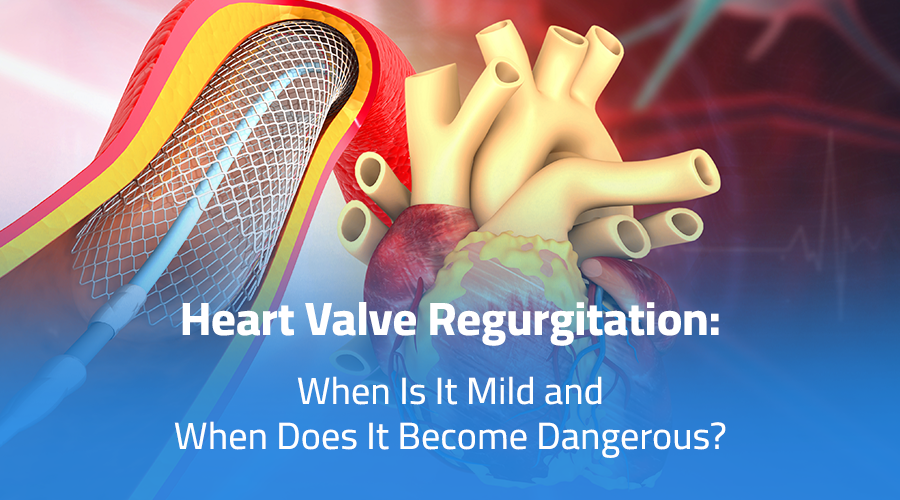
Heart Valve Regurgitation: When Is It Mild and When Does It Become Dangerous?
Heart valves are vital structures that ensure blood flows in one direction within the heart, maintaining the efficiency of cardiac function and the circulatory system. Any dysfunction of these valves can lead to serious disturbances in blood flow. One of the most common valve disorders is heart valve regurgitation.
While some cases of valve regurgitation are mild and do not pose an immediate threat, neglecting advanced cases may result in serious, life-threatening complications.
In this article, we provide a clear, evidence-based explanation of:
What is heart valve regurgitation? When is it mild and not a cause for concern? And when does it become a serious condition requiring medical or surgical intervention?
What Is Heart Valve Regurgitation?
Heart valve regurgitation (Valvular Regurgitation) occurs when a heart valve does not close completely, allowing blood to leak backward instead of moving forward in the correct direction.
This backward flow increases the workload on the heart muscle and may gradually impair cardiac function if not managed appropriately.
Types of Heart Valve Regurgitation
Regurgitation can affect any of the four heart valves. The most common types include:
- Mitral valve regurgitation
- Aortic valve regurgitation
- Tricuspid valve regurgitation
- Pulmonary valve regurgitation (less common)
The impact on the patient varies depending on the affected valve and the severity of regurgitation.
Causes of Heart Valve Regurgitation
Several conditions can lead to valve regurgitation, including:
- Aging and degenerative changes of valve tissue
- Rheumatic heart disease
- Weakening or enlargement of the heart muscle
- Myocardial infarction affecting valve-supporting muscles
- Congenital heart valve abnormalities
- Infective endocarditis
- Chronic high blood pressure
Identifying the underlying cause is a crucial step in assessing disease severity and determining the most appropriate treatment strategy.
When Is Heart Valve Regurgitation Mild?
In many cases, valve regurgitation is mild or minimal and is characterized by:
- Absence of significant symptoms
- Incidental detection during echocardiography
- No impairment of heart muscle function
- No need for immediate medical or surgical intervention
In such cases, physicians usually recommend regular follow-up with periodic cardiac evaluations, along with adherence to a healthy lifestyle.
Symptoms of Mild Valve Regurgitation
Most patients are asymptomatic. However, some may experience:
- Mild fatigue during exertion
- Occasional palpitations
- Mild shortness of breath at times
These symptoms do not necessarily indicate a dangerous condition but warrant medical monitoring.
When Does Heart Valve Regurgitation Become Dangerous?
Valve regurgitation becomes a serious condition when it affects heart function or causes significant symptoms. Warning signs include:
- Progressive and Noticeable Symptoms
Such as:
- Shortness of breath at rest or during sleep
- Swelling of the legs or feet
- Severe fatigue affecting daily activities
- Persistent palpitations or irregular heart rhythm
- Enlargement or Weakening of the Heart Muscle
As regurgitation worsens, the heart muscle must work harder to compensate for the backward blood flow, leading to chamber enlargement and eventual weakening.
- Reduced Cardiac Pumping Efficiency
A decline in cardiac output is a key indicator for intervention, even if symptoms are not yet severe.
- Pulmonary Hypertension
Especially in cases of mitral valve regurgitation, elevated pulmonary artery pressure may develop and lead to serious complications if left untreated.
How Is Heart Valve Regurgitation Diagnosed?
Diagnosis relies on several investigations, most importantly:
- Echocardiography (Echo) – the primary tool to assess valve regurgitation severity
- Electrocardiogram (ECG)
- Cardiac CT or MRI in selected cases
- Cardiac catheterization for complex or unclear conditions
Accurate diagnosis is essential for determining the optimal timing of intervention.
When Does Heart Valve Regurgitation Require Medical or Surgical Intervention?
Treatment or surgery is considered in the following situations:
- Moderate to severe regurgitation with symptoms
- Evidence of impaired heart muscle function
- Failure of medical therapy to control symptoms
- Severe regurgitation even without symptoms, if cardiac function is affected
The primary goal of intervention is to protect the heart muscle before irreversible damage occurs.
Treatment Options for Heart Valve Regurgitation
- Medical Therapy
Used to relieve symptoms and improve heart performance, but it does not correct the structural valve defect.
- Valve Repair
Often the preferred option in selected cases, particularly for mitral valve regurgitation.
- Valve Replacement
Indicated when repair is not feasible, using either a mechanical or biological valve.
Can Patients Live with Heart Valve Regurgitation?
Yes, patients with mild regurgitation can live for many years without significant problems, provided they:
- Maintain regular medical follow-up
- Control blood pressure
- Avoid smoking
- Maintain a healthy body weight
- Adhere to prescribed medications
Conclusion
Heart valve regurgitation is not the same for all patients—it may be mild and harmless or progress into a serious condition if left unmonitored.
Early diagnosis and regular follow-up are essential to determine when regurgitation is safe and when it requires medical or surgical intervention.
The correct medical decision is based not only on the severity of regurgitation but also on its impact on heart function and the patient’s quality of life.