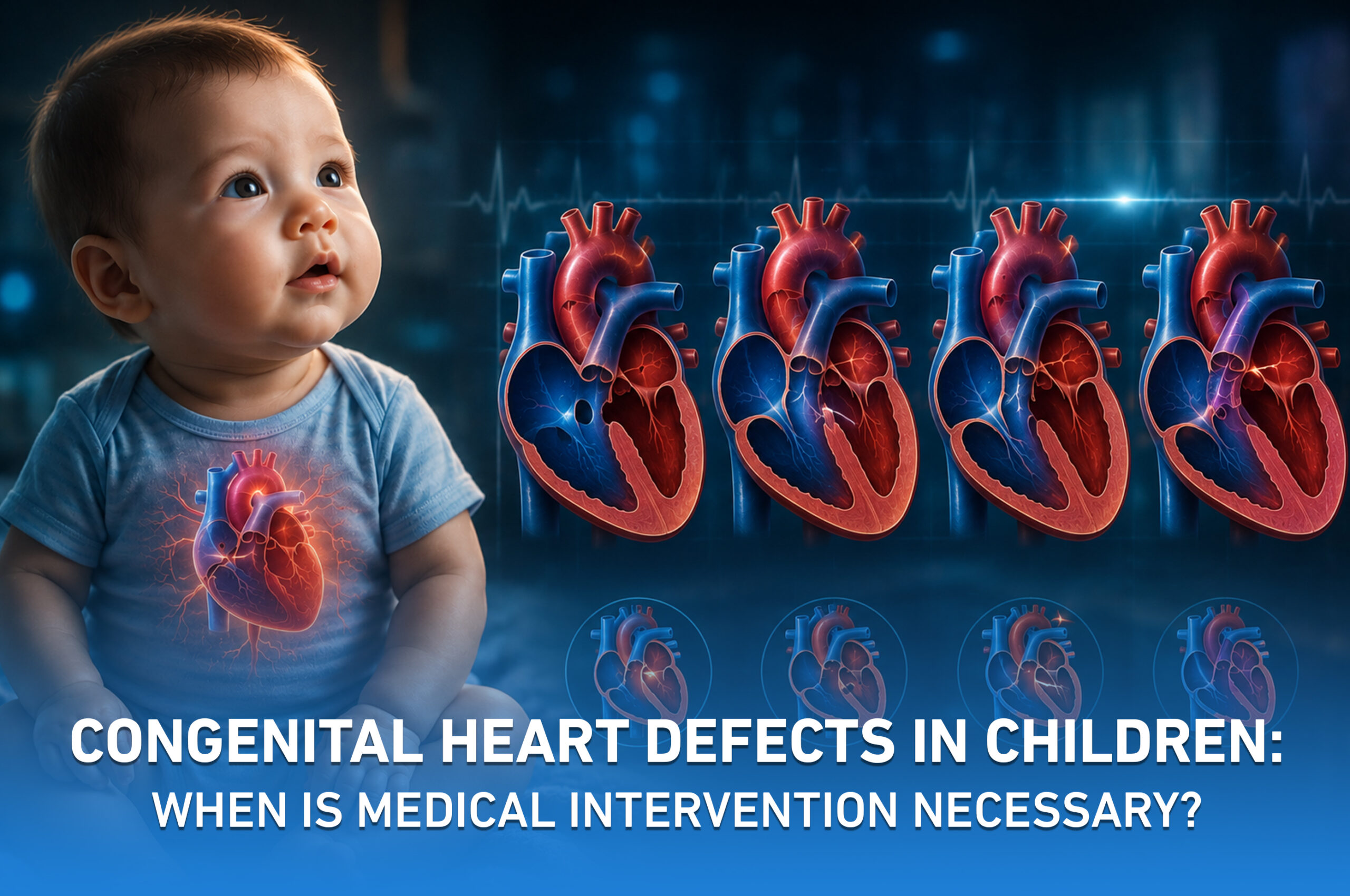
Congenital heart defects in children vary widely in severity. Some are mild and only require regular follow-up, while others can significantly affect heart function, growth, and oxygen delivery and therefore need early medical or surgical intervention.
The key question for parents is: When does a child actually need treatment instead of observation?
What Are Congenital Heart Defects?
Congenital heart defects are structural abnormalities of the heart present at birth. They may include:
- Holes in the heart (ASD, VSD)
- Heart valve abnormalities
- Narrowing of blood vessels
- Complex structural heart malformations
The severity depends on the size of the defect and its effect on blood flow and oxygen levels.
When Is No Immediate Intervention Needed?
Some children can be safely monitored without immediate treatment, especially in cases such as:
- Small holes in the heart
- Defects that do not affect heart function
- No significant symptoms
- Normal growth and development
In these cases, regular echocardiography follow-up is usually sufficient.
When Does Intervention Become Necessary?
Intervention (catheter-based or surgical) is considered when the defect begins to affect the child’s health or heart function.
1. Poor Growth or Failure to Thrive
Signs include:
- Inadequate weight gain
- Delayed growth compared to peers
- Fatigue during feeding in infants
This may indicate that the heart is not delivering enough oxygenated blood to support normal growth.
2. Difficulty or Rapid Breathing
Warning signs include:
- Persistent fast breathing
- Visible effort during breathing
- Use of chest muscles while breathing
This can indicate increased strain on the heart or lungs.
3. Cyanosis (Bluish Skin Discoloration)
- Blue lips or fingertips
- Worsening color during crying or exertion
This is a serious sign of low oxygen levels and often requires urgent evaluation.
4. Recurrent Chest Infections
- Frequent pneumonia or respiratory infections
- Persistent cough or wheezing
These may occur due to increased blood flow to the lungs or heart-related congestion.
5. Heart Enlargement or Reduced Cardiac Function
Findings on echocardiography may include:
- Enlarged heart chambers
- Reduced pumping efficiency
- Elevated pulmonary pressure
These findings often indicate the need for intervention to prevent long-term damage.
6. Exercise Intolerance in Older Children
- Early fatigue during play
- Inability to keep up with peers
- Dizziness or fainting during activity
What Types of Treatment Are Available?
Depending on the condition, treatment may include:
Catheter-Based Procedures
Used for conditions such as:
- Closure of ASD or VSD in selected cases
- Balloon dilation of narrowed valves or vessels
Surgery
Required for:
- Complex defects
- Large holes or structural abnormalities
- Cases not suitable for catheter intervention
How Does the Doctor Decide When to Intervene?
The decision is based on multiple factors:
- Size of the defect
- Impact on heart and lung function
- Presence and severity of symptoms
- Echocardiography findings
- Child’s growth and overall health
Why Early Intervention Matters
Delaying treatment in appropriate cases may lead to:
- Permanent heart muscle damage
- Pulmonary hypertension
- Growth and developmental delays
- Reduced long-term quality of life
Early and accurate timing of intervention is crucial for the best outcomes.
Conclusion
Not all congenital heart defects require immediate treatment, but intervention becomes necessary when the defect begins to affect breathing, growth, oxygen levels, or heart function.
Early diagnosis and close monitoring are essential to determine the right timing for treatment and ensure the best possible outcome for the child.
Schedule a Consultation
If your child has been diagnosed with a congenital heart defect or shows concerning symptoms, Dr. Ihab Elsharkawy provides specialized pediatric cardiac evaluation to determine whether observation or intervention is the most appropriate course of action.