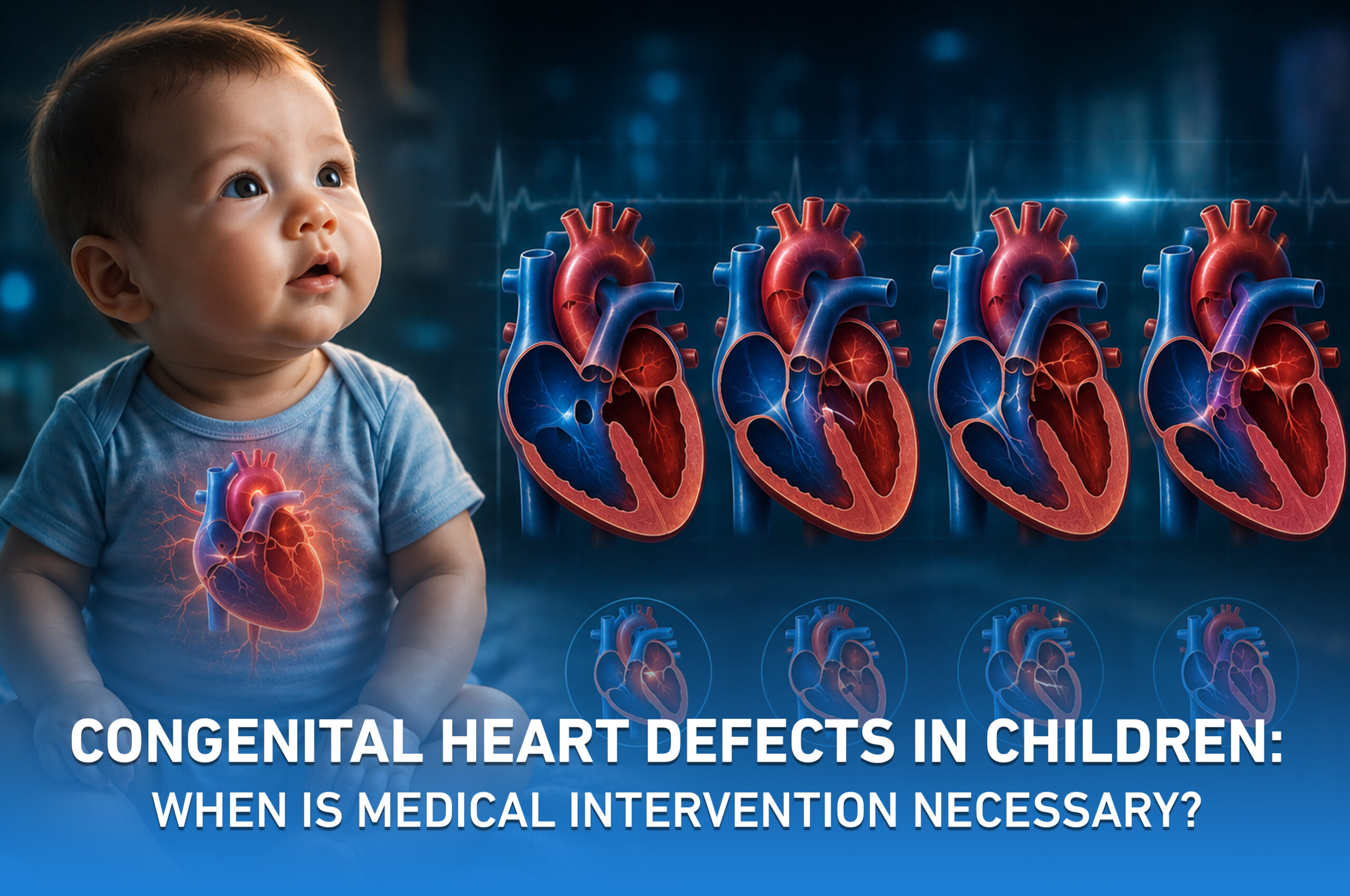
Congenital heart defects (CHDs) are among the most common birth defects worldwide. They occur when the heart or its major blood vessels do not develop normally before birth. While some defects are mild and may require only regular monitoring, others can significantly affect a child’s growth, oxygen levels, and heart function, making early treatment essential.
For many parents, one of the most important questions is: When does a congenital heart defect require intervention rather than observation?
What Are Congenital Heart Defects?
Congenital heart defects are structural abnormalities present at birth that affect the way blood flows through the heart.
Common examples include:
- Atrial Septal Defect (ASD) – a hole between the upper chambers of the heart
- Ventricular Septal Defect (VSD) – a hole between the lower chambers
- Patent Ductus Arteriosus (PDA)
- Heart valve abnormalities
- Tetralogy of Fallot and other complex heart defects
The impact of these defects depends on their size, location, and effect on circulation.
Do All Congenital Heart Defects Need Treatment?
No.
Many congenital heart defects are small and may:
- Cause no symptoms
- Close on their own over time
- Have little effect on heart function
In these situations, regular follow-up with a pediatric cardiologist may be all that is needed.
Signs That a Child May Need Intervention
Treatment is considered when the defect begins to affect the child’s health, growth, or heart function.
1. Poor Weight Gain and Delayed Growth
One of the earliest warning signs is:
- Difficulty gaining weight
- Slower growth than expected
- Fatigue during feeding in infants
When the heart works harder than normal, the child may burn more energy and struggle to grow properly.
2. Rapid or Difficult Breathing
Children with significant heart defects may experience:
- Fast breathing even at rest
- Increased effort during breathing
- Sweating during feeding or activity
These symptoms may indicate excess blood flow to the lungs or increased strain on the heart.
3. Cyanosis (Bluish Skin or Lips)
A bluish discoloration of the lips, tongue, or fingertips may indicate:
- Low oxygen levels in the blood
- A serious congenital heart condition requiring urgent evaluation
Cyanosis is one of the most important signs that should never be ignored.
4. Recurrent Chest Infections
Frequent respiratory infections may occur because:
- Certain heart defects increase blood flow to the lungs
- Fluid congestion can make infections more likely
Repeated chest infections may be a reason to consider intervention.
5. Heart Enlargement or Reduced Heart Function
Imaging studies may reveal:
- Enlarged heart chambers
- Increased pressure in the lungs
- Reduced pumping ability of the heart
When these changes occur, delaying treatment may lead to long-term complications.
6. Exercise Intolerance in Older Children
Older children may show signs such as:
- Fatigue during play
- Inability to keep up with peers
- Shortness of breath with activity
- Dizziness or fainting episodes
These symptoms suggest that the defect is affecting overall heart performance.
How Is the Need for Treatment Determined?
Doctors evaluate several factors before recommending intervention:
- Type of congenital heart defect
- Size of the defect
- Severity of symptoms
- Child’s age and growth pattern
- Echocardiography findings
- Effects on the lungs and heart chambers
Each case is unique, and treatment decisions are individualized.
What Treatment Options Are Available?
Cardiac Catheterization
Some defects can be treated without open surgery through catheter-based procedures, such as:
- Closing selected ASDs or PDAs
- Dilating narrowed valves or vessels
These procedures are minimally invasive and often involve shorter recovery times.
Heart Surgery
Surgery may be necessary when:
- The defect is large
- The anatomy is complex
- Catheter-based treatment is not suitable
Modern pediatric cardiac surgery has significantly improved outcomes for children with congenital heart disease.
Why Is Early Intervention Important?
Delaying treatment when it is needed may lead to:
- Permanent damage to the heart muscle
- Pulmonary hypertension (high pressure in the lung arteries)
- Growth and developmental delays
- Reduced quality of life later in childhood and adulthood
Early treatment often provides the best opportunity for normal growth and development.
Can Children Live Normal Lives After Treatment?
In many cases, yes.
With appropriate treatment and follow-up, most children can:
- Attend school normally
- Participate in daily activities
- Enjoy healthy growth and development
- Lead active lives with minimal restrictions
Long-term outcomes continue to improve thanks to advances in pediatric cardiology and cardiac surgery.
Conclusion
Not every congenital heart defect requires immediate treatment, but intervention becomes necessary when the condition affects a child’s growth, breathing, oxygen levels, or heart function. Early diagnosis and regular follow-up are essential to determine the right timing for treatment and achieve the best possible outcome.
Schedule a Consultation
If your child has been diagnosed with a congenital heart defect or is experiencing symptoms such as poor growth, breathing difficulties, or bluish discoloration of the lips, Dr. Ihab Elsharkawy provides specialized evaluation and treatment planning to determine the most appropriate course of care.