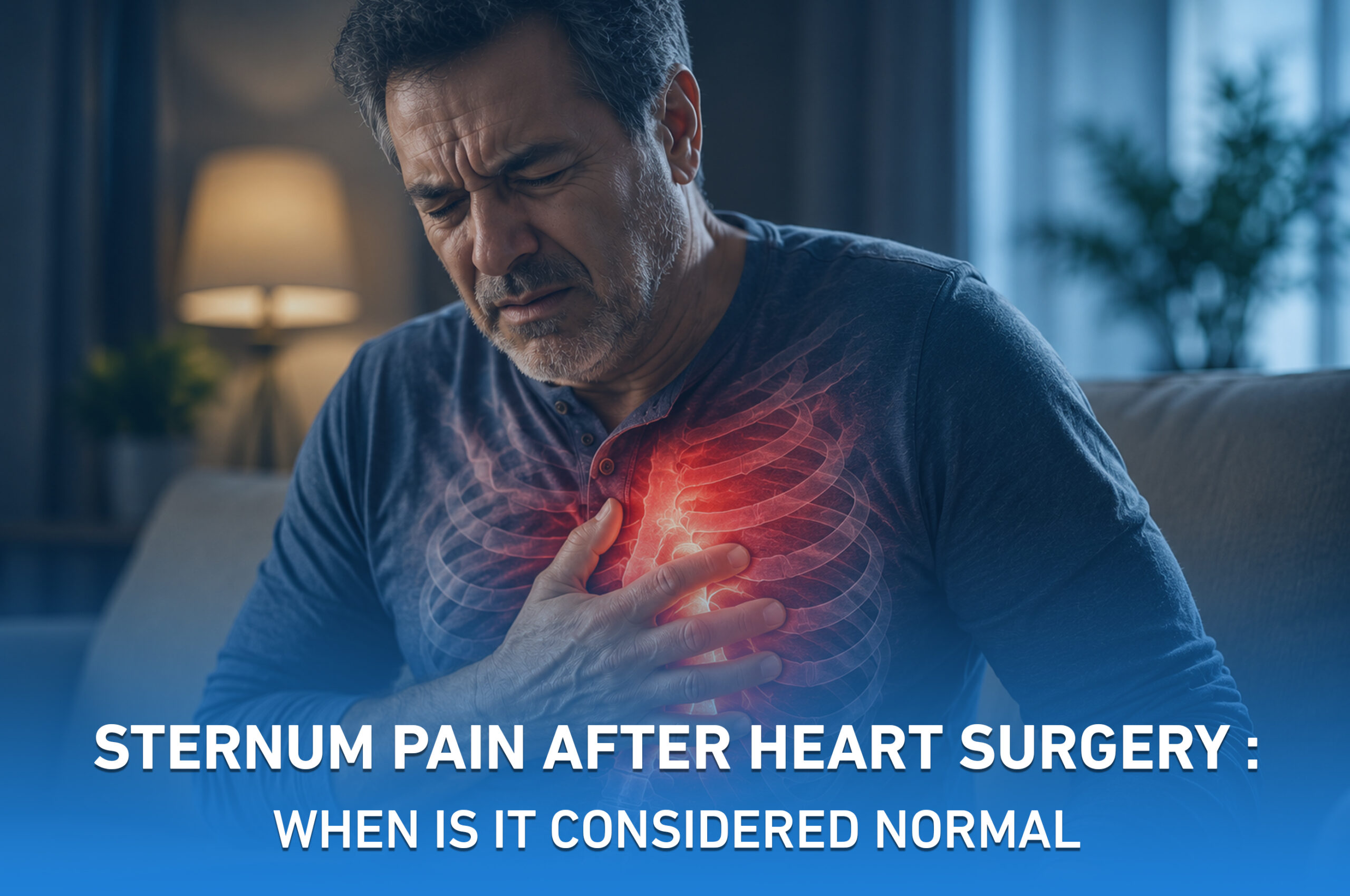
After open-heart surgery, the sternum (breastbone) is surgically divided to allow access to the heart. Because of this, it is completely normal for patients to experience pain or discomfort in the chest area during the recovery period.
However, the intensity and duration of this pain can vary, and in some cases, it may indicate a complication that needs medical attention.
So when is chest bone pain expected, and when should it raise concern?
Is Chest Bone Pain Normal After Open-Heart Surgery?
Yes. In most patients, chest bone pain is a normal part of healing, especially during the first weeks after surgery. It occurs due to:
- Surgical cutting and healing of the sternum
- Healing of muscles and surrounding tissues
- Natural inflammation after surgery
- Limited movement in the early recovery phase
This discomfort usually improves gradually over time.
How Does Normal Pain Feel?
Pain is generally considered normal if it is:
- Mild to moderate in intensity
- Gradually improving day by day
- Worse only with movement, coughing, or sneezing
- Responsive to prescribed pain medications
- Not associated with signs of infection
How Long Does the Pain Last?
In most patients:
- Noticeable improvement occurs within 2–4 weeks
- Significant healing happens within 6–12 weeks
- Mild tightness or discomfort may persist for a few months
Full bone healing continues gradually over time.
When Is Chest Bone Pain Not Normal?
Certain symptoms may indicate a complication and require medical evaluation:
1. Pain That Gets Worse Instead of Better
Concern arises if:
- Pain increases over time
- Pain returns strongly after initial improvement
2. Redness or Swelling at the Surgical Site
This may suggest:
- Wound infection
- Local inflammation
3. Persistent Fever
Pain accompanied by:
- Fever
- Chills
may indicate infection.
4. Feeling of Instability or Movement in the Sternum
This is an important warning sign and may suggest:
- Poor healing of the sternum
- Sternal instability or partial separation
5. Severe Pain With Breathing or Coughing
This may be related to:
- Pleural inflammation
- Delayed healing of the chest wall
6. Discharge From the Wound
Such as:
- Pus
- Abnormal fluid
This requires urgent medical evaluation.
Causes of Chest Bone Pain After Surgery
Normal Causes:
- Bone healing process
- Muscle strain after surgery
- Surgical trauma
- Coughing or sudden movement
Concerning Causes:
- Wound infection
- Poor sternal healing
- Postoperative complications
- Excessive strain on the chest before full recovery
How to Reduce Chest Bone Pain
1. Take Prescribed Pain Medications
- Follow your doctor’s instructions
- Do not stop medications abruptly
2. Gradual Physical Activity
- Light walking is encouraged
- Avoid sudden or heavy movements
3. Support the Chest When Coughing
- Hold a pillow against the chest
- Reduces pressure on the sternum
4. Chest Physiotherapy
- Helps improve lung expansion
- Supports faster recovery and pain reduction
When Should You Seek Medical Attention?
Contact your doctor immediately if you experience:
- Severe or worsening chest pain
- Fever or chills
- Redness, swelling, or discharge from the wound
- Sensation of chest bone instability
- Shortness of breath
Conclusion
Chest bone pain after open-heart surgery is usually a normal and expected part of the healing process. It gradually improves over weeks to months as the sternum heals. However, increasing pain, fever, wound changes, or instability of the chest bone may indicate complications that require prompt medical evaluation.
Schedule a Consultation
If you have undergone open-heart surgery and are experiencing persistent chest pain or concerning symptoms, Dr. Ihab Elsharkawy provides specialized follow-up care to evaluate your condition and ensure safe and complete recovery.