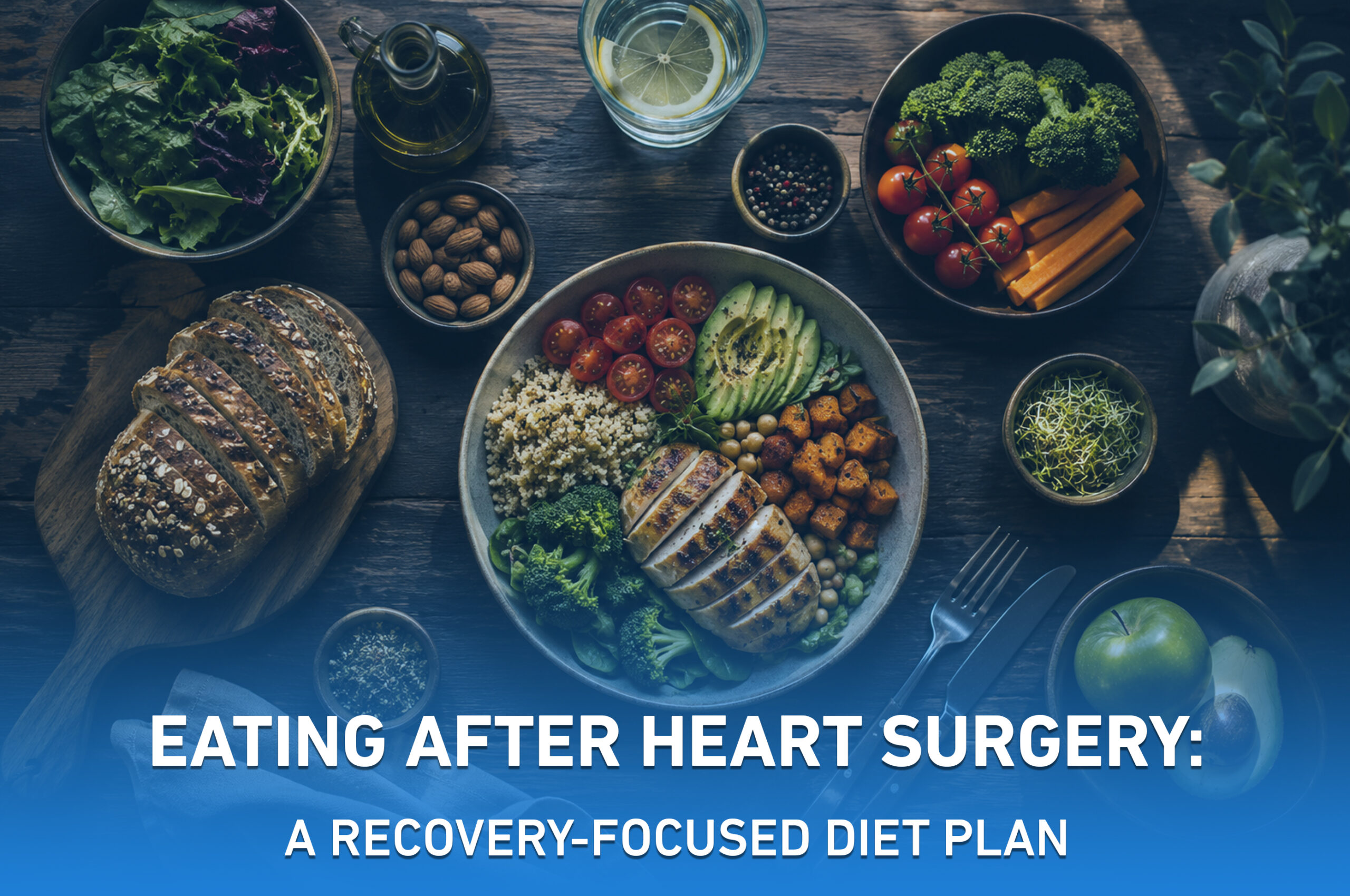
After open-heart surgery or any cardiac procedure, recovery does not depend only on medications and follow-ups. A proper diet plays a crucial role in healing, strengthening the heart muscle, and reducing the risk of future complications.
A well-balanced diet helps improve circulation, supports wound healing, and controls major risk factors such as blood pressure, cholesterol, and diabetes.
Why Is Diet Important After Heart Surgery?
After surgery, the body needs to:
- Heal surgical wounds efficiently
- Reduce inflammation
- Restore heart muscle strength
- Prevent further blockage in the arteries
Nutrition directly supports all of these processes and becomes an essential part of long-term recovery.
Key Nutritional Principles After Heart Surgery
1. Reduce Saturated Fats
Patients should limit:
- Fatty meats
- Fried foods
- Butter and ghee in large amounts
- Fast food and processed meals
These foods increase the risk of new artery blockages.
2. Reduce Salt Intake
Excess salt can lead to:
- High blood pressure
- Fluid retention
- Increased strain on the heart
It is recommended to limit:
- Pickles
- Processed and canned foods
- Chips and packaged snacks
3. Increase Fruits and Vegetables
Fruits and vegetables help:
- Improve blood vessel health
- Reduce inflammation
- Provide essential antioxidants
Helpful options include:
- Apples
- Oranges
- Spinach
- Broccoli
4. Healthy Protein for Healing
Protein is essential for tissue repair after surgery. Good sources include:
- Fish
- Grilled chicken
- Legumes (lentils, beans, chickpeas)
- Eggs in moderation
5. Choose Whole Grains Over Refined Carbohydrates
Prefer:
- Oats
- Brown rice
- Whole grain bread
Instead of:
- White bread in large amounts
- Sugary refined carbohydrates
Foods to Avoid After Heart Surgery
- Fried foods
- Processed meats (sausages, deli meats)
- Sugary drinks
- Excess sweets
- Trans fats and hydrogenated oils
These foods can negatively affect long-term heart health.
Fluid Intake After Heart Surgery
Water intake is important, but should be managed carefully:
- Follow the doctor’s recommended fluid limit
- Avoid excessive fluids in patients with heart failure
- Reduce caffeine when possible
Is a Special Diet Always Required Long Term?
Initially after surgery, dietary restrictions are stricter. Over time, patients transition to:
- A long-term heart-healthy diet
- Balanced lifestyle habits
- Weight control
- Continuous risk factor management
The Importance of Weight Control
Maintaining a healthy weight helps:
- Reduce strain on the heart
- Improve breathing and mobility
- Lower the risk of recurrent coronary disease
Practical Dietary Tips After Surgery
- Eat smaller, frequent meals
- Avoid heavy meals before sleep
- Use healthy cooking methods (grilling, boiling, steaming)
- Read food labels carefully
- Follow guidance from a doctor or nutritionist
Conclusion
Diet after heart surgery is not just about eating healthy—it is a fundamental part of the recovery process. Proper nutrition supports healing, protects the arteries, and reduces the risk of future cardiac complications.
Every healthy food choice after surgery contributes to long-term heart protection and better quality of life.
Schedule a Consultation
If you have undergone heart surgery and need a personalized diet plan or long-term recovery guidance, Dr. Ihab Elsharkawy provides specialized cardiac follow-up and tailored recommendations based on your condition.