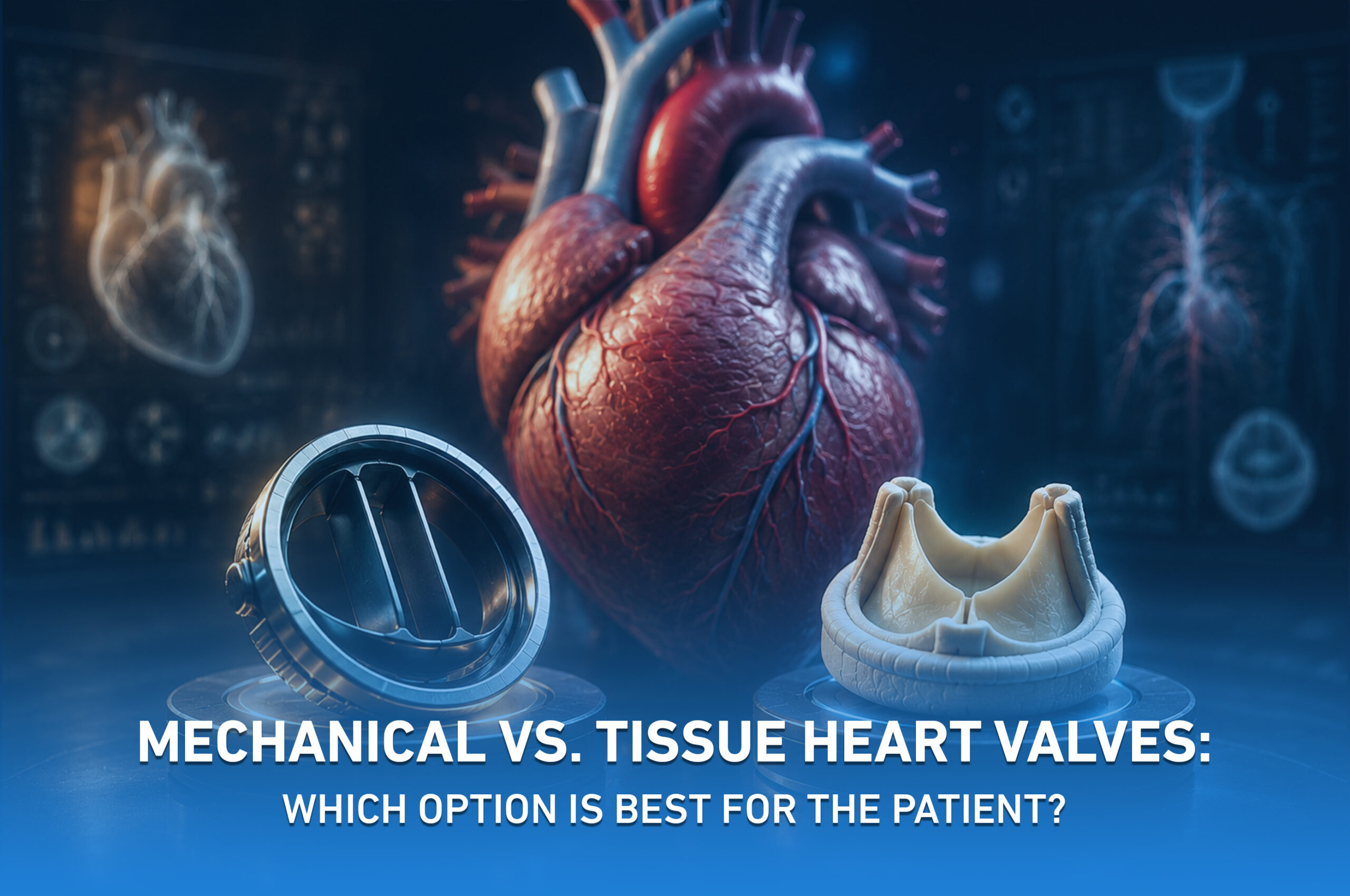
When a patient needs heart valve replacement, one of the most important decisions is choosing between a mechanical valve and a biological (tissue) valve. This choice is not simply personal preference—it depends on several medical factors that determine which option is more suitable for each individual.
So what is the difference between the two types, and how does the doctor decide?
What Is a Mechanical Heart Valve?
A mechanical valve is an artificial valve made from durable materials such as carbon-based alloys. It is designed to function efficiently for a very long time.
Advantages:
- Extremely long lifespan (often lifelong durability)
- Suitable for younger patients
- Rarely needs replacement once implanted
Disadvantages:
- Requires lifelong blood thinners (e.g., warfarin)
- Regular monitoring of blood coagulation (INR testing) is necessary
- Higher risk of bleeding if anticoagulation is not well controlled
- Some patients may hear a clicking sound from the valve
What Is a Biological (Tissue) Heart Valve?
A biological valve is made from human or animal tissue (such as bovine or porcine valves). It functions more like a natural heart valve.
Advantages:
- Usually does not require long-term anticoagulation
- Easier daily life with fewer medication restrictions
- Lower bleeding risk compared to mechanical valves
Disadvantages:
- Limited lifespan compared to mechanical valves
- May degenerate over time and require replacement
- Faster deterioration in younger patients
Key Differences Between Mechanical and Biological Valves
Mechanical Valve:
- Very durable, often lifelong
- Requires lifelong blood thinners
- Preferred in younger patients
Biological Valve:
- Limited lifespan
- Usually no long-term blood thinners required
- Preferred in older patients or special cases
Which Valve Is More Suitable for the Patient?
The decision depends on several important factors:
1. Patient Age
- Younger patients: Mechanical valves are often preferred due to their durability
- Older patients: Biological valves are usually recommended to avoid long-term anticoagulation
2. Ability to Take Blood Thinners Safely
- If the patient can reliably manage INR monitoring → mechanical valve may be suitable
- If adherence is difficult or risky → biological valve is preferred
3. Lifestyle and Daily Activities
- Patients at higher risk of bleeding or injury → biological valve may be safer
- Patients with stable lifestyle and good follow-up → mechanical valve is an option
4. Other Medical Conditions
Conditions that influence the decision include:
- Kidney disease
- Bleeding disorders
- Liver disease
- High risk of falls or trauma
5. Patient Preference After Medical Counseling
After explaining the risks and benefits, the final decision is usually made jointly between the doctor and the patient.
Is One Valve Universally Better?
No.
There is no “best valve for everyone.” Instead, there is a most suitable valve for each individual patient based on age, health condition, and lifestyle.
When Is a Mechanical Valve Preferred?
- Younger age
- Need for long-term durable solution
- Ability to maintain strict anticoagulation monitoring
When Is a Biological Valve Preferred?
- Older patients
- Patients who cannot safely use blood thinners
- Patients preferring fewer long-term medication requirements
Conclusion
The main difference between mechanical and biological heart valves lies in durability and the need for blood thinners. Mechanical valves last longer but require lifelong anticoagulation, while biological valves offer easier daily management but may wear out over time.
The final choice is always based on a careful medical evaluation tailored to the patient’s condition and lifestyle.
Schedule a Consultation
If you are considering heart valve replacement or want to know which valve type is most suitable for your condition, Dr. Ihab Elsharkawy provides specialized cardiac evaluation to help you make the most appropriate treatment decision.