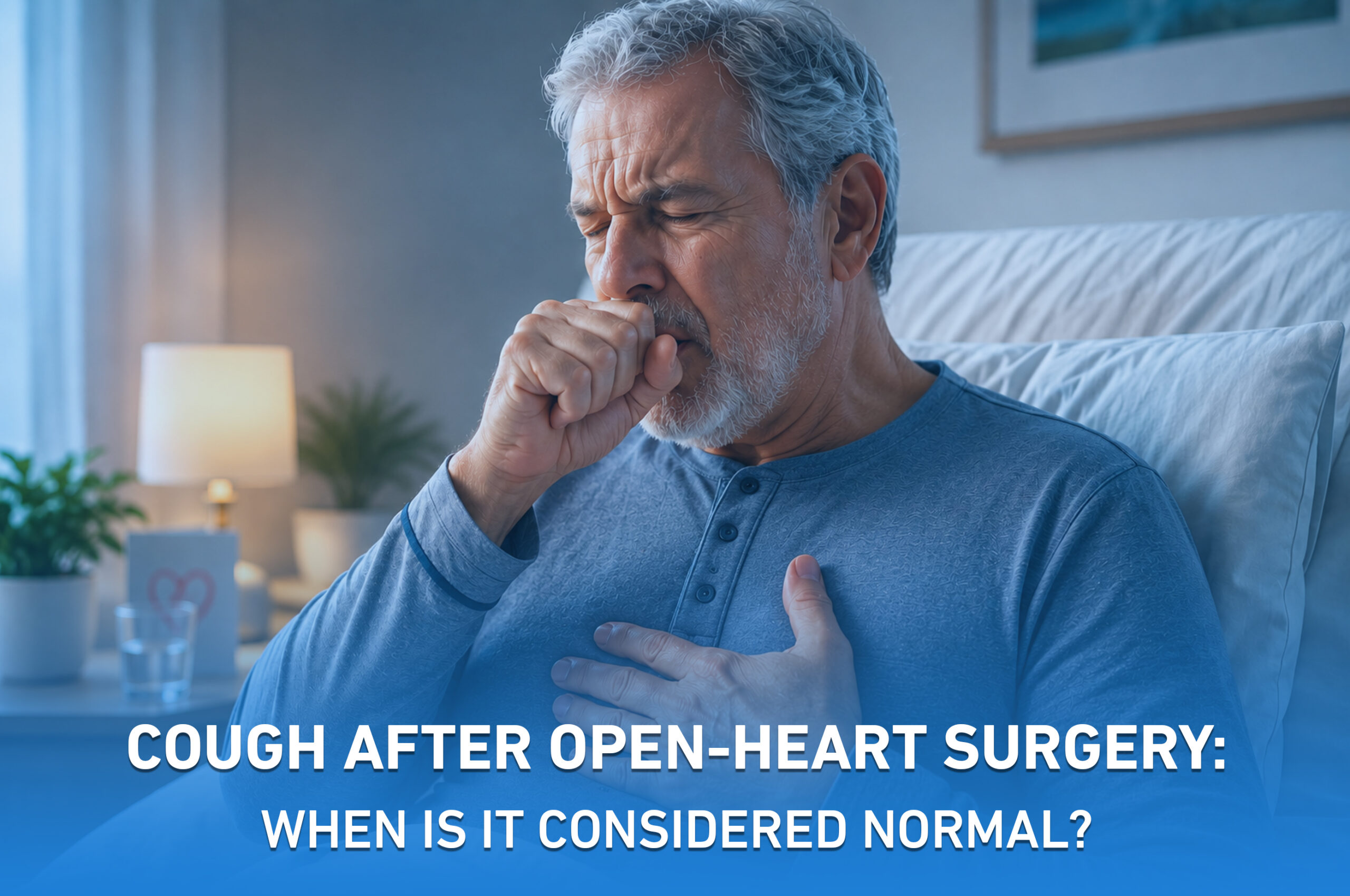
After open-heart surgery, it is very common for patients to experience a mild to moderate cough during the recovery period. This usually happens due to the effects of anesthesia, the breathing tube used during surgery, or temporary fluid and secretion buildup in the lungs.
In most cases, this cough is part of the normal healing process. However, in some situations, it may indicate a complication that requires medical attention. The key question is: When is a cough normal, and when is it a warning sign?
Is Cough Normal After Open-Heart Surgery?
Yes. A mild cough is expected in many patients during the first weeks after surgery. Common causes include:
- Irritation of the throat from the breathing tube
- Temporary weakness of respiratory muscles
- Accumulation of lung secretions
- Reduced mobility in the early postoperative period
This type of cough usually improves gradually with breathing exercises and physiotherapy.
When Is Cough Considered Normal?
A post-surgical cough is generally not concerning if it is:
- Mild to moderate in intensity
- Gradually improving over time
- Not associated with fever
- Not producing abnormal or infected sputum
- Not significantly affecting breathing
When Should You Be Concerned About Cough After Surgery?
Certain warning signs may indicate an underlying problem that needs medical evaluation:
1. Cough With Yellow or Green Sputum
This may suggest:
- Chest infection
- Bronchitis or postoperative pneumonia
2. Fever Accompanying the Cough
Cough combined with:
- Persistent fever
- Chills or sweating
may indicate an infection that requires prompt treatment.
3. Shortness of Breath
If cough is associated with:
- Difficulty breathing
- Feeling of breathlessness
- Rapid breathing
this may signal a lung or heart-related complication.
4. Chest Pain That Worsens With Coughing
This could indicate:
- Inflammation of the pleura (lining of the lungs)
- Delayed healing of the chest bone (sternum)
5. Persistent or Worsening Cough
A cough that:
- Does not improve over time
- Becomes progressively worse
should be evaluated by a physician.
6. Blood in Sputum
Coughing up blood is a serious symptom that may indicate:
- Severe infection
- Pulmonary complications
- Other postoperative issues requiring urgent evaluation
Causes of Cough After Open-Heart Surgery
Normal (Expected) Causes:
- Effects of general anesthesia
- Irritation from the breathing tube
- Temporary lung secretion buildup
- Reduced deep breathing and mobility
Causes That May Require Medical Attention:
- Chest infection (pneumonia or bronchitis)
- Fluid accumulation around the lungs
- Poor lung expansion after surgery
- Postoperative infection
How to Reduce Cough After Surgery
1. Breathing Exercises
- Use of incentive spirometer
- Deep breathing exercises several times daily
2. Early Mobilization
- Walking as soon as allowed
- Helps prevent lung congestion
3. Adequate Hydration (if permitted by doctor)
- Helps thin mucus and secretions
4. Chest Physiotherapy
- Helps clear lung secretions
- Improves lung function and recovery
When Should You Seek Immediate Medical Attention?
Contact your doctor immediately if you experience:
- Severe or worsening cough
- Cough with blood
- Persistent fever
- Significant shortness of breath
- Severe chest pain
Conclusion
Cough after open-heart surgery is usually a normal and temporary part of recovery. However, it should improve gradually over time. If it becomes persistent, worsens, or is associated with fever, breathlessness, or abnormal sputum, it may indicate a complication that requires medical evaluation.
Early recognition of warning signs helps ensure safe recovery and prevents serious postoperative issues.
Schedule a Consultation
If you have undergone open-heart surgery and are experiencing persistent cough or concerning symptoms, Dr. Ihab Elsharkawy provides specialized cardiac follow-up to evaluate your condition and ensure safe recovery.