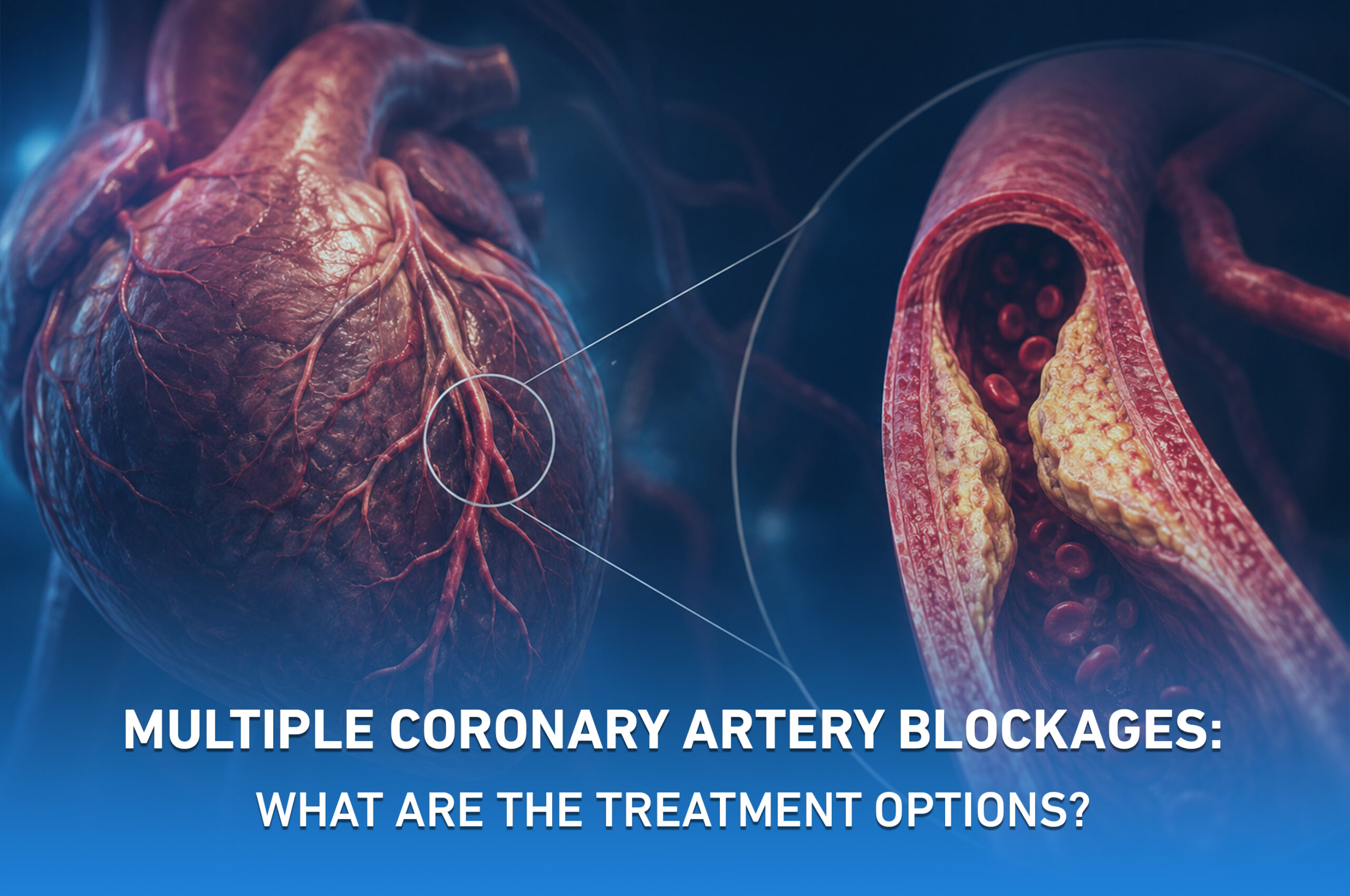
Multi-vessel coronary artery disease occurs when more than one of the heart’s main arteries becomes narrowed or blocked due to the buildup of fatty deposits (atherosclerosis). This reduces blood flow and oxygen supply to the heart muscle.
The severity of the condition depends not only on the number of affected arteries, but also on the degree of blockage, symptoms, and heart muscle function.
How Does Coronary Artery Blockage Develop?
The main cause is atherosclerosis, which develops gradually due to:
- High cholesterol levels
- Smoking
- Diabetes
- High blood pressure
- Lack of physical activity
- Genetic predisposition
Over time, plaque builds up inside the artery walls, narrowing or completely blocking blood flow.
Symptoms of Multi-Vessel Coronary Artery Disease
Symptoms vary depending on severity but commonly include:
- Chest pain or pressure (angina)
- Shortness of breath
- Fatigue with minimal exertion
- Palpitations or irregular heartbeat
- Dizziness or excessive sweating
In advanced cases, symptoms may appear even at rest.
How Is the Condition Diagnosed?
Doctors use several diagnostic tools, including:
1. ECG (Electrocardiogram)
- Detects signs of reduced blood flow to the heart
2. Stress Test
- Evaluates how the heart performs under physical exertion
3. Echocardiography
- Assesses heart muscle function and pumping efficiency
4. Coronary Angiography (Cardiac Catheterization)
This is the most important test, as it:
- Identifies the number of blocked arteries
- Determines the severity and location of blockages
- Helps guide the best treatment option
What Are the Treatment Options?
Treatment depends on the severity of the condition and overall patient health.
1. Medical Therapy
Used in mild or stable cases, and includes:
- Antiplatelet drugs (e.g., aspirin)
- Statins to lower cholesterol
- Blood pressure medications
- Medications to improve blood flow to the heart
Goal:
- Control symptoms
- Slow disease progression
- Reduce risk of heart attack
However, medication does not remove existing blockages.
2. Coronary Angioplasty and Stenting
This is used when:
- Blockages are moderate or localized
- A limited number of arteries are affected
Advantages:
- Minimally invasive procedure
- Quick recovery
- Opens blocked arteries using stents
Limitations:
- Not suitable for all patients
- Risk of re-narrowing over time in some cases
3. Coronary Artery Bypass Grafting (CABG)
This is often the preferred option in multi-vessel disease, especially when:
- Several major arteries are blocked
- The left main coronary artery is affected
- The heart muscle is weakened
What is the procedure?
- Surgeons create new pathways (bypass grafts)
- Blood is rerouted around the blocked arteries
Advantages:
- Long-term durable solution
- Highly effective in complex cases
- Reduces the need for repeat procedures
How Do Doctors Choose the Best Treatment?
The decision depends on several key factors:
- Number of blocked arteries
- Degree and location of blockage
- Heart muscle function
- Patient age and overall health
- Presence of conditions like diabetes or kidney disease
- Angiography results
Often, the decision is made by a multidisciplinary Heart Team.
Is Multi-Vessel Coronary Disease Dangerous?
Yes, but it is highly treatable when diagnosed early.
The main risks come from:
- Delayed treatment
- Heart attack (myocardial infarction)
- Progressive weakening of the heart muscle
Can It Be Treated Without Surgery?
In some mild cases, yes—but:
- Medication alone is not enough in severe blockages
- Angiography findings determine the need for intervention
Conclusion
Multi-vessel coronary artery blockage is a serious but treatable condition. Treatment options include medical therapy, stenting, or bypass surgery, and the best choice depends on the severity of disease and heart function.
Early diagnosis plays a critical role in preventing complications and ensuring the best possible outcome.
Schedule a Consultation
If you have been diagnosed with multi-vessel coronary artery disease or are experiencing chest pain or related symptoms, Dr. Ihab Elsharkawy provides specialized cardiac evaluation to determine the most suitable treatment plan, whether medical, catheter-based, or surgical.