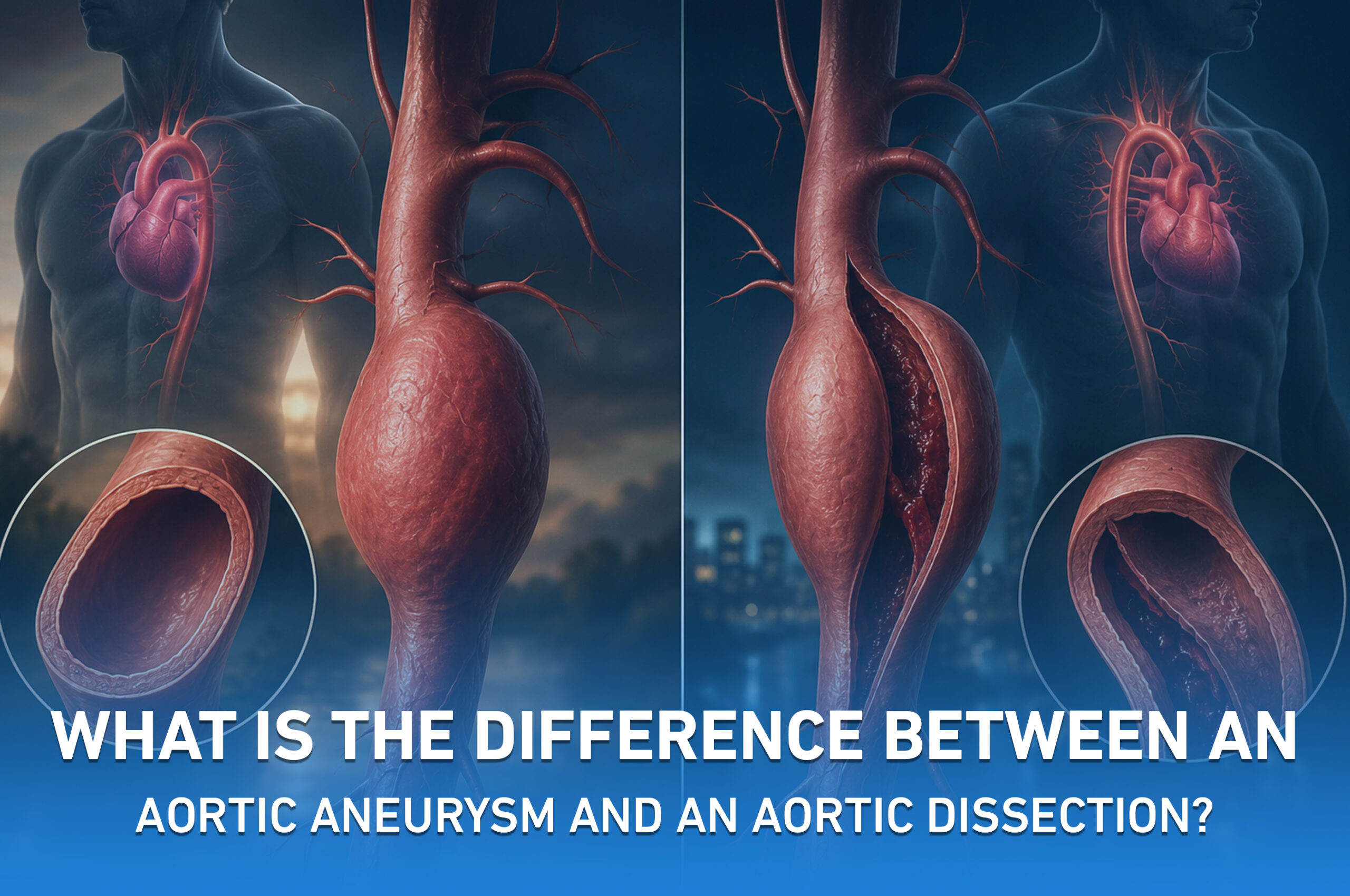
Diseases of the aorta—the main blood vessel carrying blood from the heart to the rest of the body—can be life-threatening if not properly understood and managed.
Two conditions that are often confused by patients are Aortic Aneurysm and Aortic Dissection. Although they both involve the same blood vessel, they are completely different in nature, severity, and management.
1. What Is an Aortic Aneurysm?
An aortic aneurysm is a gradual and abnormal enlargement of a segment of the aorta due to weakness in the vessel wall.
In simple terms, the aorta begins to expand like a balloon because its wall becomes weaker over time.
How does it develop?
- Progressive weakening of the aortic wall
- Long-standing high blood pressure
- Age-related degeneration
- Genetic factors or connective tissue disorders
- Inflammatory or vascular diseases
Is an aortic aneurysm dangerous?
An aneurysm can remain silent for years without symptoms, but it becomes dangerous when:
- It reaches a large size
- It grows rapidly
- It becomes at risk of rupture (bursting)
A ruptured aneurysm is a medical emergency and can be life-threatening.
2. What Is an Aortic Dissection?
An aortic dissection is a completely different and far more acute condition.
It occurs when there is a tear in the inner layer of the aortic wall, allowing blood to enter between the layers and split them apart.
How does it happen?
- A sudden tear develops in the inner lining of the aorta
- Blood flows between the layers of the aortic wall
- A false channel is created within the vessel wall
This process disrupts normal blood flow and weakens the structural integrity of the aorta.
Why is aortic dissection an emergency?
Aortic dissection is considered a life-threatening emergency because it can:
- Block blood flow to vital organs
- Lead to complete rupture of the aorta
- Cause severe internal bleeding
Immediate medical intervention is often required.
Key Differences Between Aneurysm and Dissection
1. Nature of the Condition
- Aneurysm: Gradual dilation of the aortic wall
- Dissection: Sudden tear in the inner wall with blood splitting the layers
2. Onset
- Aneurysm: Develops slowly over years
- Dissection: Occurs suddenly and acutely
3. Symptoms
- Aneurysm: Often asymptomatic for a long time
- Dissection: Sudden, severe chest or back pain (often described as tearing or ripping pain)
4. Severity
- Aneurysm: Long-term risk if not monitored
- Dissection: Immediate life-threatening emergency
5. Treatment Approach
- Aneurysm:
- Regular monitoring if small
- Elective surgical or endovascular repair if large or expanding
- Dissection:
- Emergency treatment (surgical or endovascular depending on type and location)
Can an Aneurysm Lead to Dissection?
Yes, in some cases.
If an aneurysm becomes very large and the aortic wall becomes extremely weak, it may increase the risk of:
- Aortic dissection
- Or even rupture
However, not all aneurysms progress to dissection.
When Does an Aneurysm Become Dangerous?
An aortic aneurysm becomes more concerning when:
- It reaches a critical size
- It expands rapidly over time
- Blood pressure remains uncontrolled
- Symptoms begin to appear due to pressure on nearby structures
Conclusion
- Aortic Aneurysm: A slow, progressive enlargement of the aorta that requires monitoring and sometimes planned intervention
- Aortic Dissection: A sudden, life-threatening tear in the aortic wall that requires emergency treatment
The key difference is that an aneurysm is usually a gradual condition, while dissection is an acute emergency.
Schedule a Consultation
If you have been diagnosed with an aortic aneurysm or are concerned about aortic disease, a detailed cardiac evaluation can help determine the safest timing and type of treatment.
Dr. Ihab Elsharkawy provides specialized assessment and management of complex aortic conditions, ensuring early detection and appropriate intervention when needed.