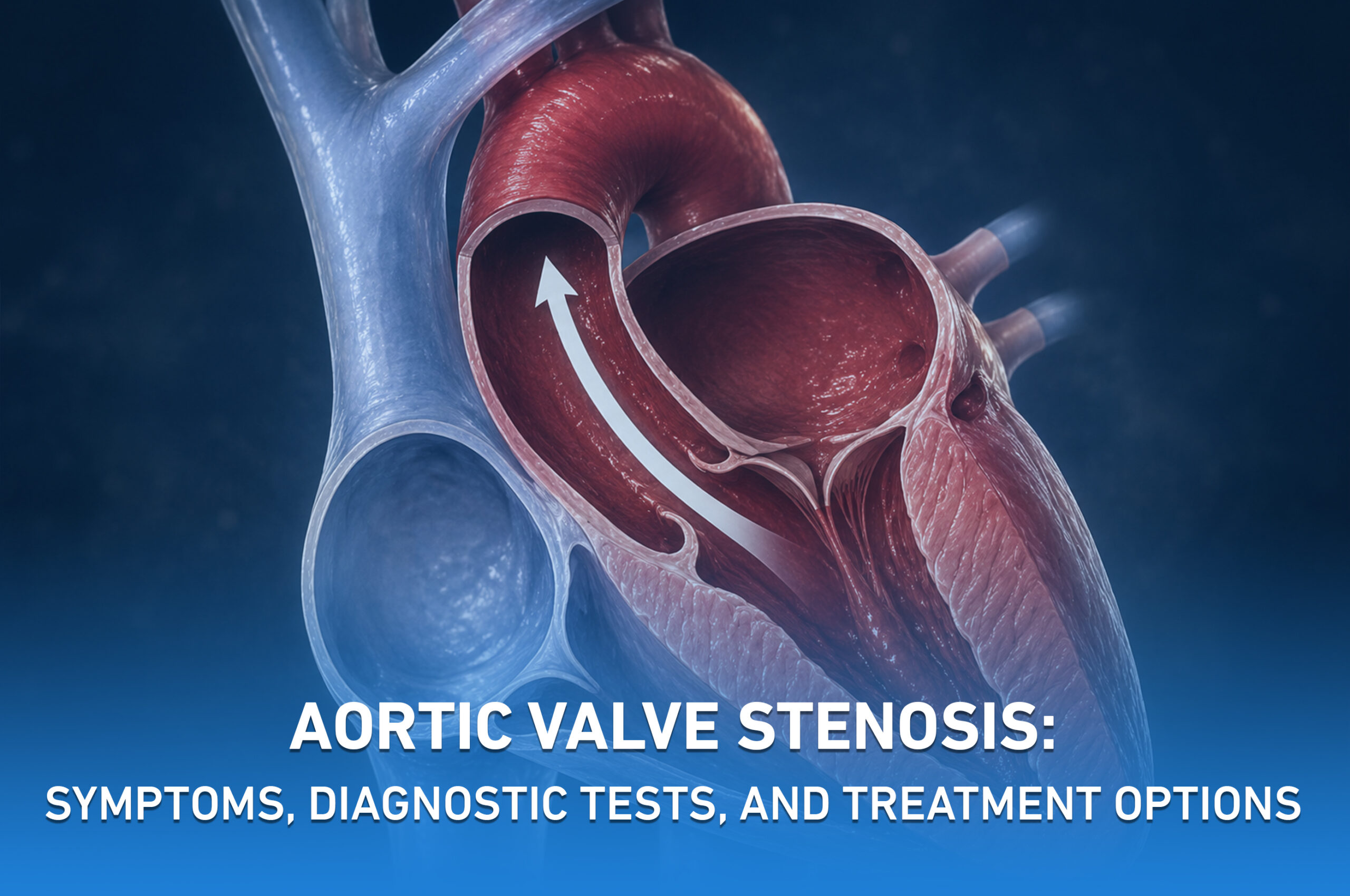
Aortic valve stenosis is one of the most common valvular heart diseases. It occurs when the aortic valve becomes narrowed, limiting the flow of blood from the left ventricle to the aorta and the rest of the body. Over time, this increases the workload on the heart muscle and may lead to serious complications if left untreated.
The severity of the condition varies widely, and patients may remain asymptomatic in the early stages before symptoms gradually develop.
What Is Aortic Valve Stenosis?
The aortic valve controls blood flow from the left ventricle into the aorta, which supplies oxygen-rich blood to the entire body.
When this valve becomes narrowed:
- Blood flow from the heart is reduced
- Pressure increases inside the left ventricle
- The heart muscle becomes thicker over time
- Cardiac function may progressively decline
Symptoms of Aortic Valve Stenosis
Symptoms may not appear in the early stages, but as the disease progresses, patients may experience:
1. Shortness of Breath
Especially during physical activity, gradually worsening over time.
2. Chest Pain or Pressure
Often similar to angina and typically triggered by exertion.
3. Dizziness or Fainting (Syncope)
May occur during exercise or sudden standing.
4. Fatigue and Reduced Exercise Capacity
Even routine daily activities may become difficult.
5. Palpitations
Irregular or rapid heartbeats in more advanced cases.
Why Is Aortic Stenosis Dangerous?
The danger lies not only in the narrowing itself but in its long-term impact on the heart. If untreated, it can lead to:
- Left ventricular dysfunction
- Heart failure
- Serious arrhythmias
- Increased risk of sudden cardiac events
Diagnostic Tests for Aortic Stenosis
A combination of tests is used to confirm diagnosis and assess severity:
1. Echocardiography (Heart Ultrasound)
This is the most important diagnostic tool and evaluates:
- Severity of valve narrowing
- Aortic valve area
- Left ventricular function (Ejection Fraction)
- Pulmonary artery pressure
- Overall heart structure
2. Electrocardiogram (ECG)
Used to detect:
- Left ventricular hypertrophy
- Rhythm disturbances
- Electrical strain on the heart
3. Chest X-Ray
Provides information about:
- Heart size
- Lung condition
- Signs of congestion or fluid overload
4. Cardiac Catheterization (In Selected Cases)
Often performed in older patients or before surgery to assess:
- Coronary artery disease
- Severity of valve obstruction
- Presence of associated cardiac conditions
5. CT Scan or MRI
Used in complex cases to evaluate:
- Aortic anatomy
- Valve structure in detail
- Surgical or transcatheter planning
Treatment Options for Aortic Valve Stenosis
Treatment depends on severity, symptoms, and overall patient condition.
1. Medical Treatment
Medications do not cure the valve narrowing but help manage symptoms by:
- Controlling blood pressure
- Reducing fluid overload
- Supporting heart function
It is usually used in mild cases or as temporary support.
2. Regular Monitoring
In mild to moderate asymptomatic cases:
- Regular echocardiographic follow-up
- Monitoring disease progression
- Timely intervention when needed
3. Surgical Aortic Valve Replacement (Open Heart Surgery)
This is the standard treatment for advanced cases.
It involves:
- Removing the diseased valve
- Replacing it with a mechanical or biological valve
- Restoring normal blood flow and reducing heart strain
4. Transcatheter Aortic Valve Implantation (TAVI / TAVR)
A minimally invasive option used in selected patients, especially:
- Elderly patients
- High surgical risk cases
It involves:
- Implanting a new valve via catheter
- Avoiding open-heart surgery
- Faster recovery time
When Is Intervention Needed?
Treatment decisions are based on:
- Severity of stenosis on echocardiography
- Presence of symptoms (chest pain, fainting, dyspnea)
- Heart muscle function
- Impact on daily life
In advanced cases, delaying treatment may increase the risk of complications even if symptoms are mild.
Conclusion
Aortic valve stenosis is a progressive condition that may remain silent in early stages but can lead to severe complications if not treated appropriately.
Diagnosis and management depend on:
- Echocardiography findings
- Clinical symptoms
- Additional imaging when needed
- Choosing between surgery or TAVI based on patient condition
Early evaluation is essential to ensure safe and effective treatment.
Schedule a Consultation
If you have been diagnosed with aortic valve stenosis or are experiencing related symptoms, Dr. Ihab Elsharkawy provides specialized evaluation and treatment planning to determine the most appropriate and safest therapeutic approach for your condition.