Introduction
Heart diseases have become one of the most common health challenges in modern times, affecting millions worldwide with blocked arteries, valve problems, or weakened heart muscles. Fortunately, modern medicine offers a variety of heart procedures to treat these conditions and improve quality of life. But how does a doctor determine which procedure is suitable for each patient? And what is the difference between catheterization and open-heart surgery? This comprehensive guide answers these questions.
What Are Heart Procedures?
Heart procedures refer to all surgical or minimally invasive interventions aimed at treating cardiovascular problems, whether involving coronary arteries, heart valves, or cardiac rhythm. These procedures vary widely, ranging from simple interventions like cardiac catheterization to complex open-heart surgeries that require specialized equipment to maintain circulation during the operation.
Types of Heart Procedures
- Cardiac Catheterization and Stenting
Cardiac catheterization is a minimally invasive procedure where a thin tube is inserted through an artery in the arm or leg to reach the coronary arteries. This technique can diagnose blockages or narrowing and simultaneously allow the placement of stents to open blocked arteries.
Advantages of catheterization:
- No need for chest opening.
- Shorter recovery period compared to open-heart surgery.
- High success rates in cases of partial blockage.
When doctors recommend catheterization:
- Partial coronary artery blockage.
- Persistent angina (chest pain).
- Urgent need to widen arteries to prevent a heart attack.
- Open-Heart Surgery
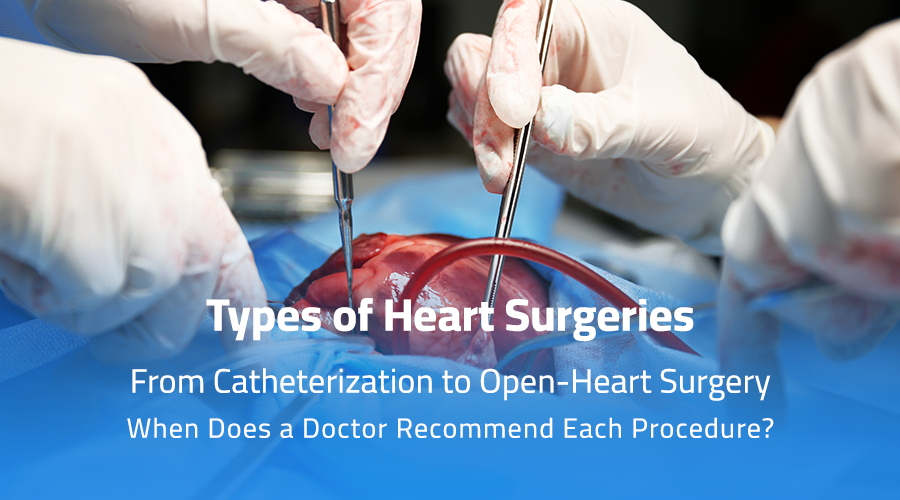
Open-heart surgery is a complex surgical procedure performed by opening the chest to access the heart directly. It is used for more severe conditions such as significant arterial blockages, heart valve problems, or congenital heart defects in children.
Types of open-heart procedures:
- Coronary Artery Bypass Grafting (CABG): Creates a new path for blood flow around blocked arteries.
- Heart valve surgery: Repair or replacement of damaged heart valves.
- Pediatric heart surgery: Corrects congenital defects like septal defects (holes in the heart).
- Heart transplantation: For patients whose hearts cannot function normally.
When doctors decide on open-heart surgery:
- Complete or multiple coronary artery blockages.
- Heart valve failure.
- Complex congenital heart diseases in children.
- Advanced heart failure unresponsive to medication or catheterization.
Risks and procedure duration:
- Although relatively high-risk, success rates in specialized centers are very high.
- Surgeries typically last between 3 to 6 hours, depending on the case.
- Recovery is longer than catheterization, often ranging from 2 weeks to 1 month.
- Minimally Invasive and Beating Heart Surgery
Minimally invasive heart surgery: Small surgical interventions using thin instruments and cameras to correct heart problems, such as valve repair, without fully opening the chest.
Beating heart surgery: A modern technique that allows open-heart surgery while the heart continues to beat, avoiding the need for a heart-lung machine.
Benefits of these procedures:
- Shorter hospital stay.
- Reduced complications such as infection or blood loss.
- Faster recovery, especially for elderly patients.
Pediatric Heart Procedures
Heart procedures for children play a vital role in treating congenital defects, such as:
- Atrial or ventricular septal defects (holes in the heart).
- Underdeveloped or narrowed heart valves.
- Major artery malformations.
These procedures require specialized care but have very high success rates in advanced pediatric centers.
How Does the Doctor Choose the Procedure?
The choice of heart procedure depends on several factors:
- Type of heart problem: Artery blockage, damaged valve, or congenital defect.
- Patient age and overall health: Elderly or immunocompromised patients may require less invasive procedures.
- Severity of blockage or condition: Catheterization for minor blockages, open-heart surgery for severe or complex issues.
- Presence of other conditions: Diabetes or high blood pressure can influence the type of surgery and recovery plan.
Pre- and Post-Operation Tips
Before the procedure:
- Comprehensive heart, kidney, and liver tests.
- Control of blood pressure, blood sugar, and cholesterol.
- Quit smoking weeks before surgery.
After the procedure:
- Follow prescribed medications such as blood thinners or cholesterol-lowering drugs.
- Engage in light exercise as advised by the doctor.
- Regular check-ups to monitor recovery and prevent complications.
Conclusion
With significant advancements in medical science, heart patients now have access to a wide range of procedures, from simple catheterization to complex open-heart surgeries. Understanding the differences between each procedure and the right timing to perform them helps patients make informed decisions in consultation with specialized doctors. The key is regular health monitoring, controlling blood pressure, sugar, and cholesterol, and maintaining a healthy lifestyle to prevent future heart problems.
Book Your Appointment with Dr. Ihab for Heart Evaluation
If you are considering a heart procedure—catheterization, open-heart surgery, or valve surgery—the first step is to consult Dr. Ihab, an expert in cardiac surgery and cardiovascular care.
📌 Steps to book with Dr. Ihab:
- Contact his clinic directly via phone or website.
- Schedule a personal consultation to assess your condition and determine the most suitable procedure.
- Receive a detailed explanation of the surgery, potential risks, and recovery plan.
🔹 Don’t delay heart care: Early booking with Dr. Ihab ensures precise monitoring and a personalized treatment plan, increasing the success rate and minimizing complications.