Introduction
Heart examinations are among the most essential tools cardiologists use to diagnose heart diseases accurately and determine the best treatment plan. Two of the most common tests are Echocardiogram (ECHO) and Electrocardiogram (ECG).
Although both are related to heart health, they serve different purposes. This article explains the difference between ECHO and ECG, including when each test is needed, and how ECHO with Doppler and ECG stress test differ in function and purpose.
What Is an ECG (Electrocardiogram)?
An ECG, also known as Electrocardiogram, is a simple, non-invasive test that records the electrical activity of the heart using electrodes placed on the chest and limbs.
It shows how electrical impulses travel through the heart during each beat, helping doctors identify irregular rhythms or problems with electrical conduction.
When Is an ECG Used?
- Detecting irregular heart rhythms (arrhythmias).
- Diagnosing coronary artery disease or heart attacks.
- Evaluating heart function after surgery or cardiac events.
- Monitoring the effects of medications on heart rhythm.
What Is an ECHO (Echocardiogram)?
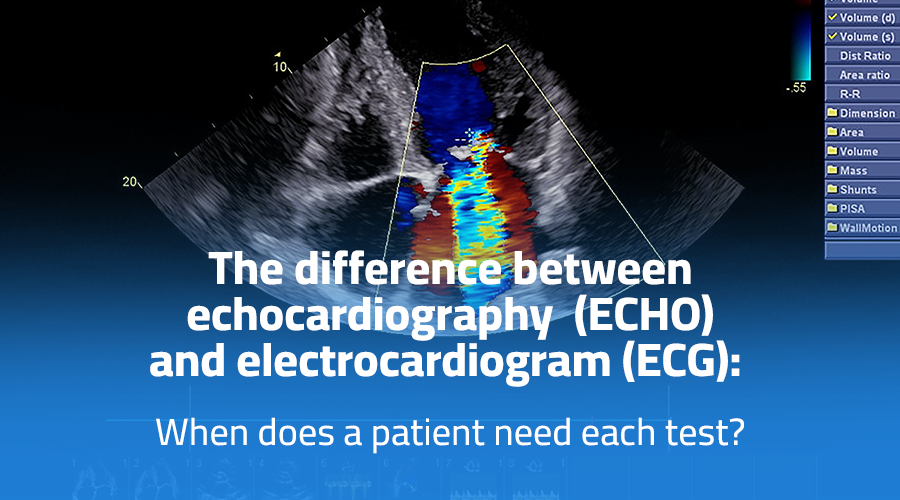
An ECHO is an ultrasound-based imaging test that uses high-frequency sound waves to create real-time images of the heart.
It allows doctors to see the size, shape, and movement of the heart’s chambers and valves, and to assess blood flow and pumping strength.
When Is an ECHO Used?
- Diagnosing valve diseases and congenital heart defects.
- Evaluating heart muscle function and ejection fraction.
- Detecting fluid around the heart (pericardial effusion).
- Monitoring heart failure or structural abnormalities.
Key Differences Between ECHO and ECG
While both tests are crucial for heart evaluation, their focus and output differ significantly.
| Aspect | ECG (Electrocardiogram) | ECHO (Echocardiogram) |
| Purpose | Measures electrical activity of the heart | Produces moving images of the heart |
| Information Provided | Rhythm, rate, and electrical conduction | Structure, function, and blood flow |
| Duration | 5–10 minutes | 10–20 minutes |
| Type of Test | Electrical recording | Ultrasound imaging |
| Pain/Risk | Completely painless and safe | Also painless and safe |
Difference Between ECHO and ECG Stress Test
A stress ECG test measures the electrical activity of the heart while the patient performs physical exercise — usually walking on a treadmill or cycling on a stationary bike. It helps reveal heart problems that may not appear when the heart is at rest, such as reduced blood flow or blocked arteries.
An ECHO stress test, on the other hand, evaluates how well the heart muscle pumps blood under stress using ultrasound imaging.
It helps detect areas of poor blood flow or damaged heart tissue.
In short:
The difference between ECHO and ECG stress test is that the ECG measures electrical signals during effort, while the ECHO shows the heart’s motion and blood flow during that same effort.
Difference Between ECHO and Doppler
A Doppler ECHO uses special ultrasound technology to measure the speed and direction of blood flow through the heart and vessels.
So, when people ask about the difference between ECHO and Doppler, the answer is that Doppler is not a separate test—it’s an advanced part of the ECHO that provides more detailed information about how blood moves through the heart.
When Does a Patient Need an ECHO or ECG?
ECG Is Usually Recommended For:
- Palpitations or irregular heartbeat.
- Unexplained fainting or dizziness.
- Chest pain or suspected heart attack.
- Post-surgery heart rhythm monitoring.
ECHO Is Usually Recommended For:
- Heart murmurs or unusual heart sounds.
- Suspected heart enlargement or weakened muscle.
- Evaluating valve disorders or regurgitation.
- Diagnosing congenital or structural heart diseases.
Is ECHO the Same as ECG?
Many patients wonder: Is ECHO the same as ECG?
The answer is no — they are completely different tests.
While ECG records the electrical activity of the heart, ECHO visualizes the mechanical structure and motion of the heart.
In some cases, doctors may request both tests together to obtain a full picture of heart function — electrical and structural.
Which Test Is More Accurate: ECHO or ECG?
Both tests are highly reliable within their respective roles.
- ECG is more accurate for detecting rhythm disturbances and electrical abnormalities.
- ECHO is more accurate for evaluating the anatomy, function, and pumping efficiency of the heart.
Therefore, they complement each other rather than compete — together providing a comprehensive evaluation of cardiac health.
Final Advice
Whether your doctor recommends an ECHO or an ECG, both tests are safe, painless, and critical for early detection of heart problems.
If you experience symptoms such as palpitations, chest pain, shortness of breath, or dizziness, consult your cardiologist to determine which test suits your condition best.
Early diagnosis can make all the difference in protecting your heart and improving your quality of life.